
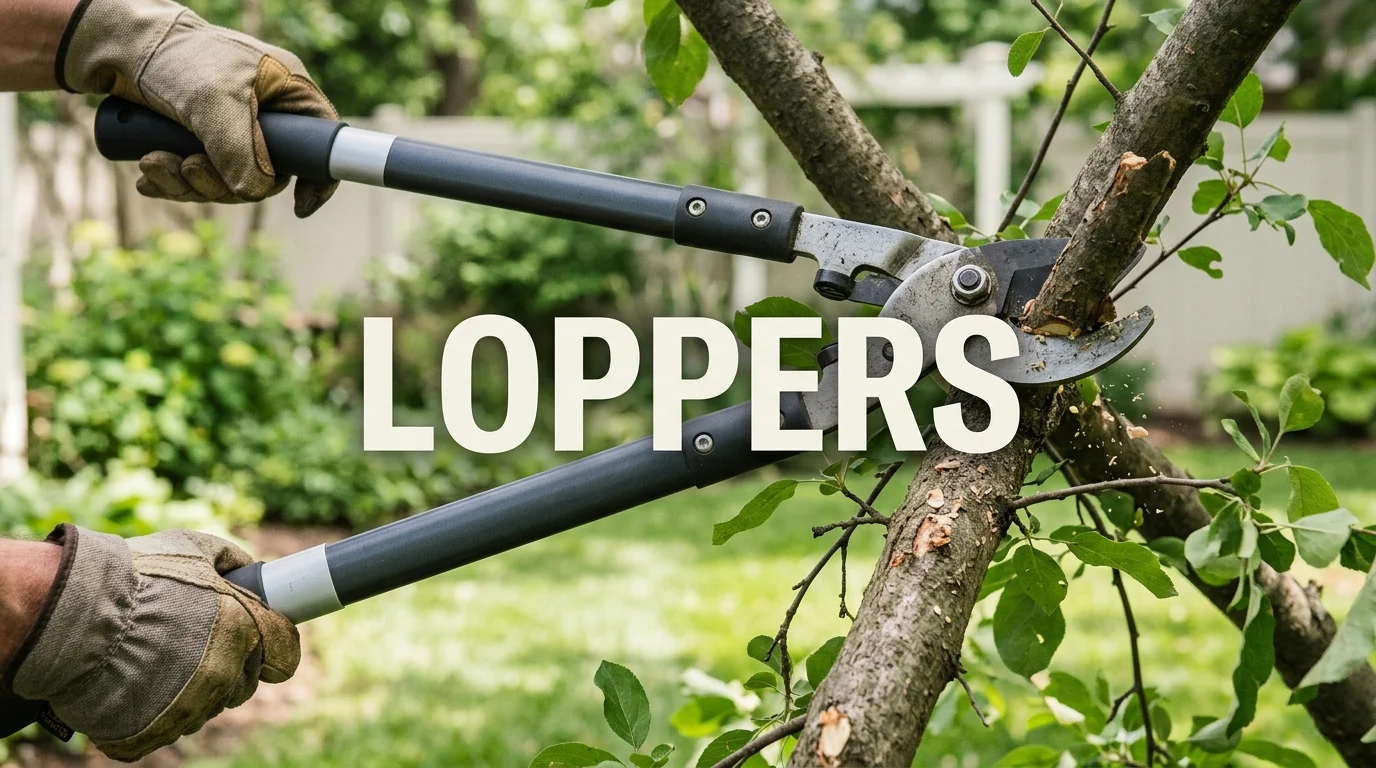
Pruning becomes much easier when the cutting tool matches the branch. Loppers fill the gap between small hand pruners and larger pruning saws. Their longer handles provide reach and extra cutting force for thicker stems.
Quick answer: Choose bypass cutters for living branches because their slicing action produces cleaner cuts. Choose anvil cutters for dead, dry wood where crushing matters less. Match the rated cutting capacity to your usual branch size, then consider handle length, tool weight, and mechanical assistance.
Quick Comparison
| Feature | Bypass | Anvil | Ratchet or Compound |
|---|---|---|---|
| Best use | Live branches | Dead or dry branches | Tougher cuts needing less hand force |
| Cutting action | Slicing | Blade against flat surface | Mechanically assisted |
| Cut quality | Clean and precise | More crushing | Depends on blade design |
| Typical user | Most homeowners | Yard cleanup | Users wanting extra assistance |
| Main advantage | Plant-friendly cuts | Strong deadwood cutting | Reduced effort |
| Main drawback | Can bind in hard wood | Can crush living stems | Added weight and complexity |
For most U.S. homeowners, a medium-length bypass model is the sensible first choice. University extension guidance generally favors bypass designs for living material because they make cleaner pruning cuts. Anvil models become more useful when your work mainly involves dead or hardened branches.
What Are Loppers Used For?
Loppers are two-handed pruning tools designed for branches beyond the comfortable range of ordinary hand pruners. Long handles provide extra mechanical advantage while extending your reach. They work well on shrubs, small tree limbs, saplings, and woody overgrowth.
Iowa State University Extension rates lopping shears for 3/4-inch to 1.5-inch branches. Actual capacity varies by manufacturer and design, so use the tool’s rating to guide your decision. Forcing oversized material can damage the cutter and leave a poor pruning wound.
The tool also fits naturally into broader yard maintenance. RoomDome’s cricket removal guide recommends regularly trimming trees and bushes around the home to keep pests away. Regular pruning can also make landscaping easier to inspect and maintain.
Bypass vs. Anvil: Which Type Should You Choose?
A bypass model works much like scissors. A sharpened blade passes a supporting jaw and slices through the branch. That action generally causes less crushing, making it suitable for green stems and living branches.
An anvil design uses a different motion. One sharpened blade closes onto a flat surface and compresses the material during the cut. It suits dry, dead, or woody growth where protecting living tissue is not the main concern.
Bypass Pros and Cons
Pros
- Cleaner cuts on healthy branches
- Good control around shrubs and young trees
- Suitable for most routine residential pruning
- Widely available in different handle lengths
Cons
- Hard, dry wood can require more effort
- Poorly maintained blades may bind
- Blade alignment matters for clean performance
Anvil Pros and Cons
Pros
- Effective on dead and dry branches
- Strong cutting action for yard cleanup
- Simple design with solid branch support
- Useful for cutting discarded material down to size
Cons
- Can crush living stems
- Less suitable for precise plant care
- Rough cuts may result when the blade becomes dull
The Verdict
Choose bypass if you plan to buy only one pair. Most residential pruning involves living shrubs, small trees, and landscape plants that benefit from cleaner cuts. Add an anvil model later if deadwood cleanup becomes a frequent task.
How to Choose Loppers for Your Yard
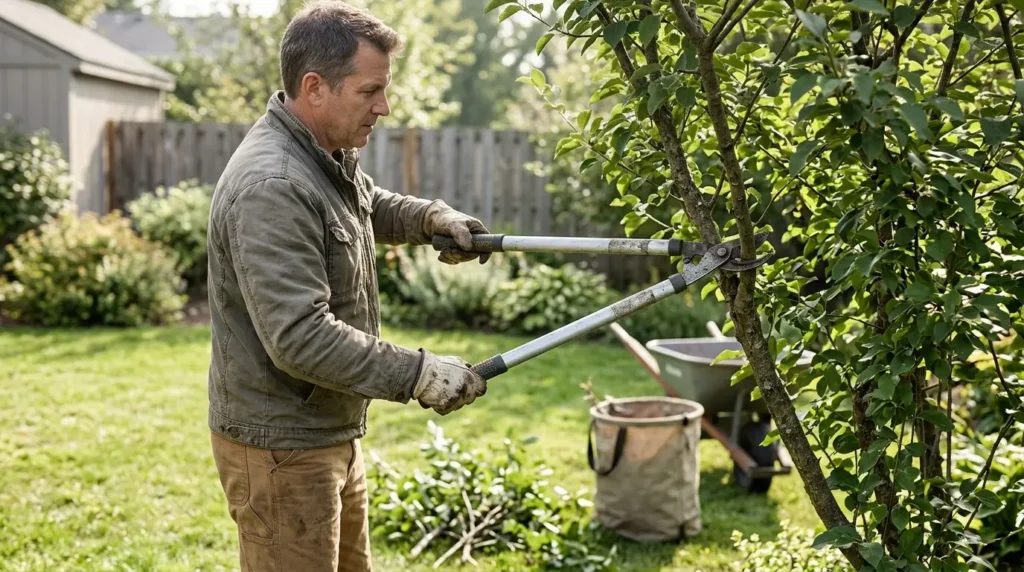
Blade design matters most, but it shouldn’t be your only buying criterion. Cutting capacity, reach, weight, grip comfort, and maintenance also affect everyday usefulness. A model with impressive specifications can still become frustrating if it feels unwieldy.
1. Check the Rated Cutting Capacity
Start by measuring the branches you prune most often. Manufacturers usually state a maximum diameter, but that figure should be treated as a limit. Working comfortably below the maximum usually requires less force and gives you better control.
North Carolina State Extension recommends this tool for branches about one-half inch to roughly 1.5 inches. Other designs may accommodate larger material, depending on their mechanism and construction. Switch to an appropriate pruning saw instead of forcing a branch that exceeds the rating.
2. Match the Blade to the Wood
Use bypass blades when the branch is alive and plant health matters. Use anvil blades when clearing brittle, dead, or dry material. This simple distinction prevents many poor pruning cuts.
You may encounter geared or compound mechanisms on either style. These systems increase mechanical advantage without changing the blade’s basic purpose. They can help when hand strength or dense wood makes ordinary cutting difficult.
3. Choose a Practical Handle Length
Long handles provide greater reach and greater mechanical advantage. They can help you reach through shrubs or tackle thicker material without excessive force. Yet extra length also creates more weight and can make close work awkward.
Telescoping handles offer flexibility because you can shorten them for nearby work. Extend them only when the extra reach clearly helps. Avoid treating extension as a substitute for safe access to high tree limbs.
4. Consider Weight Before Maximum Power
A heavy-duty tool may sound attractive until you make dozens of cuts. Added gearing, larger blades, and telescoping hardware can increase weight substantially. NC State notes that extra mechanisms can become cumbersome during longer work sessions.
Think about where you will hold the tool during normal use. A lighter model often makes more sense for overhead trimming and repeated shrub work. Greater cutting power matters more when your main task involves dense, tough branches near waist height.
5. Look for Replaceable or Serviceable Parts
A garden cutter becomes more useful when you can maintain it instead of replacing it. Check whether the blade, pivot bolt, bumper, or anvil can be serviced. A model that opens for cleaning and sharpening may provide better long-term value.
Quality steel also matters, but blade care remains essential. Dirt, sap, moisture, and repeated cutting gradually reduce performance. Clean and dry the tool before storage to limit buildup and corrosion.
6. Pay Attention to Grip Comfort
Handles transfer the cutting force through your hands, wrists, arms, and shoulders. Comfortable grips can reduce slipping and make repeated pruning less tiring. Try the opening width whenever you can before buying.
Bumpers or shock absorbers can soften the impact when a branch finally separates. That small feature becomes more noticeable during extended work. It can also reduce the harsh handle-closing sensation after tougher cuts.
7. Buy for Your Real Yard, Not the Biggest Specification
A larger tool isn’t automatically better. Homeowners with young landscaping may need a light bypass model more often than a massive compound cutter. Mature properties with considerable deadwood may justify a heavier second tool.
RoomDome’s guide to planning an outdoor living space emphasizes designing around how the yard will actually be used. The same principle works when choosing garden equipment. Match the purchase to your property and routine instead of paying for unused capacity.
Pruning Shears, Lopping Shears, or a Saw?
Hand pruners are best for smaller stems where precise, one-handed control matters. Long-handled cutters take over as branches become thicker or harder to reach. A pruning saw becomes the safer choice once the branch exceeds the cutter’s rated capacity.
This progression matters because forcing the wrong tool can damage both the plant and the equipment. University of Maryland Extension advises against cutting material too large for the selected pruning tool. Oversized cuts can tear plant tissue and dull or damage the blades.
Storm-damaged trees deserve extra caution. Hanging limbs, split trunks, and branches near utility lines can create hazards beyond ordinary yard maintenance. RoomDome’s storm-damaged tree guide recommends professional help when conditions involve serious structural or electrical risks.
How to Use a Long-Handled Cutter Safely
Inspect the branch and the area beneath it before cutting. Keep other people away from the expected fall zone. Wear eye protection and gloves when loose bark, twigs, or debris could drop during the job.
Open the blades fully and position the branch deep within the cutting head. Avoid twisting the tool sideways while applying pressure. If a branch requires extreme force, stop and move to a tool designed for larger wood.
Keep your feet stable and avoid overreaching. Telescoping handles provide useful extra distance, but they do not make unstable positions safe. Hire qualified help for large limbs, electrical hazards, or work requiring risky climbing.
Simple Maintenance That Extends Tool Life
Remove plant residue after each substantial pruning session. Dry the blades before storing the tool, especially after working in wet conditions. A small amount of suitable lubricant around the pivot can keep the mechanism moving smoothly.
Sharpen the cutting edge when cuts start requiring noticeably more pressure. Follow the original blade angle rather than creating a new bevel. Replace damaged parts when sharpening cannot restore clean cutting performance.
Storage also matters. Keep the tool in a dry location where the cutting head will not remain exposed to moisture. Proper care makes seasonal pruning easier because the tool is ready when growth returns.
Frequently Asked Questions
What size branches can loppers cut?
Loppers typically handle branches about one-half inch to 1.5 inches thick, though some models can cut larger branches. Always follow the manufacturer’s stated capacity. Choose a pruning saw once the branch exceeds that limit.
Are bypass or anvil cutters better?
Bypass cutters are generally better for living plants. Their slicing action creates a cleaner cut with less crushing. Anvil cutters make more sense for dead, hard, or dry material.
Are longer handles always better?
No. Longer handles provide added reach and mechanical advantage, but they also increase bulk. Choose enough length for your normal pruning without making the tool harder to control.
Can I use these tools on tree branches?
Yes, provided the branch remains within the tool’s rated capacity. Use a clean cutting technique and avoid oversized limbs. Large, damaged, or dangerously positioned branches may require a pruning saw or professional tree service.
Do ratchet models cut thicker branches more easily?
Ratchet mechanisms divide the cutting process into stages. This can reduce the force needed during each squeeze. They are useful when cutting harder wood or when hand strength is limited.
Choose the Tool That Fits Most of Your Pruning
For a typical U.S. yard, start with a comfortable bypass model rated for your normal branches. Prioritize manageable weight, dependable steel, comfortable grips, and serviceable parts. Add specialized designs only when your landscaping creates a repeated need for them.
Good pruning equipment should make routine maintenance easier without encouraging oversized or unsafe cuts. Match the blade to the wood, respect the capacity rating, and keep the edge clean and sharp. That approach gives plants cleaner cuts while making yard work more controlled and predictable.
—–