
Regular air conditioning maintenance helps your cooling system move air efficiently and reduces avoidable strain. Basic homeowner tasks include checking filters, clearing outdoor debris, and monitoring drainage issues. A professional should handle refrigerant, electrical testing, and deeper system inspections. Elsewhere on the site: Basement Remodel Planning.
A good maintenance routine also gives you warning before minor problems become expensive failures. Annual professional service is commonly recommended before the main cooling season. Homeowners can complete several simpler checks throughout the year.
Quick answer: Maintain your AC by checking filters regularly, keeping vents clear, removing debris around the condenser, and watching the drain system. Schedule professional service about once yearly, preferably before heavy summer use. Technicians can safely inspect refrigerant, electrical parts, coils, airflow, and system controls.
| Maintenance task | Typical timing | DIY or professional? | Why it matters |
|---|---|---|---|
| Check or replace air filter | Monthly during heavy use | DIY | Supports airflow |
| Clear condenser surroundings | Monthly or as needed | DIY | Helps outdoor airflow |
| Inspect vents and registers | Every few months | DIY | Prevents airflow restrictions |
| Check visible drain areas | Seasonally | DIY | Helps identify clogs early |
| Clean and inspect coils | Annually | Professional preferred | Supports heat transfer |
| Inspect refrigerant circuit | Annually or when problems appear | Professional | Requires specialized handling |
| Test electrical components | Annual tune-up | Professional | Identifies unsafe or worn parts |
| Test complete system operation | Annually | Professional | Finds developing performance issues |
Key Takeaways
- Check your filter frequently during the cooling season.
- Keep leaves, weeds, and other debris away from the outdoor unit.
- Don’t open or alter the refrigerant circuit yourself.
- Schedule professional service before peak cooling demand when practical.
- Investigate unusual noises, weak airflow, water leaks, or repeated cycling early.
- Keep maintenance records for future troubleshooting and equipment decisions.
Why AC Maintenance Matters
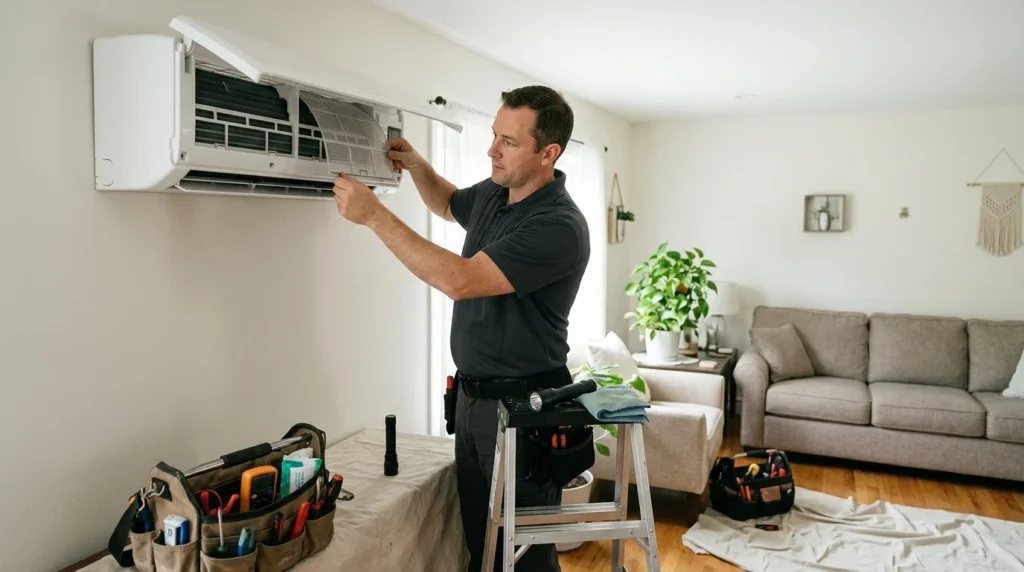
An air conditioner depends on steady airflow and effective heat transfer. Dirty filters or coils can make the equipment operate longer to achieve the same indoor temperature. That added workload can increase energy use and place more stress on components.
ENERGY STAR advises homeowners to inspect, clean, or change central-system filters regularly. It also recommends professional attention to coils, refrigerant levels, controls, drainage, and airflow. Restricted airflow can reduce system efficiency and affect comfort.
Routine care cannot guarantee that a component will never fail. It does improve your chances of finding worn or dirty parts before peak summer demand. RoomDome’s broader guide to home systems homeowners should maintain also places HVAC care among important recurring household tasks.
Air Conditioning Maintenance Checklist for Homeowners
You don’t need specialized HVAC tools for every useful maintenance task. Several checks involve observation, simple cleaning, and keeping airflow paths open. Shut down equipment first whenever the manufacturer’s instructions require it.
- Inspect the air filter. Check it regularly during periods of frequent cooling. Replace or clean it according to the equipment and filter manufacturer’s directions.
- Check supply and return vents. Make sure furniture, curtains, rugs, and household items aren’t blocking airflow.
- Clear the outdoor condenser area. Remove grass, leaves, weeds, and loose debris around the cabinet.
- Look at the outdoor coil surface. Watch for heavy dirt, bent fins, or obvious damage that may need professional attention.
- Check visible condensate areas. Look for standing water, staining, overflowing pans, or signs that drainage has slowed.
- Review thermostat operation. Confirm the displayed temperature seems reasonable and the system responds normally.
- Listen during operation. Grinding, rattling, buzzing, or repeated starting deserves further investigation.
- Compare room temperatures. Large new differences between rooms can indicate airflow or equipment problems.
- Watch cooling cycles. Repeated short cycles or unusually long operating periods can signal a developing issue.
- Schedule professional service. Ask the contractor what inspections, cleaning, measurements, and tests their tune-up includes.
These checks create a useful baseline for homeowners. They can also help you describe symptoms accurately when calling a technician. For wider warm-weather preparation, RoomDome’s summer-ready home guide covers insulation, cooling equipment, windows, and other efficiency measures.
How Often Should You Maintain Your Air Conditioner?
Professional AC service is generally recommended once each year. Spring is a practical choice because technicians can inspect the system before sustained summer demand. Carrier likewise recommends annual service and identifies spring as a suitable time for cooling-system maintenance.
Homeowner checks should happen more frequently than the professional visit. Filters deserve particular attention during heavy cooling periods, especially in dusty homes or homes with pets. Outdoor equipment may also need extra checks after storms, landscaping work, or periods of heavy pollen.
Your equipment manual should take priority over a generic schedule. Different filters, heat pumps, mini-splits, and central systems can have different service requirements. Keeping dates in a simple maintenance log makes repeated tasks easier to remember.
What Does a Professional AC Tune-Up Include?
A professional visit usually goes beyond surface cleaning. Technicians may inspect thermostat operation, electrical connections, condensate drainage, coils, blower components, refrigerant performance, and overall airflow. The exact checklist varies by contractor and equipment type.
Ask for the service checklist before the appointment. That helps you compare providers and identify services that cost extra. A written report also gives you a useful record of measurements, problems, and recommended repairs.
Refrigerant work belongs with properly qualified technicians. EPA rules require Section 608 certification for technicians performing covered work that can release regulated refrigerants. Homeowners should ask service companies whether the appropriate technician holds that certification.
What AC Maintenance Can You Safely Do Yourself?
Simple upkeep usually focuses on accessible areas and basic housekeeping. Changing an accessible filter and removing loose outdoor debris are common homeowner tasks. You can also monitor vents, thermostat behavior, water leakage, sounds, and cooling consistency.
Avoid taking apart energized components or experimenting with refrigerant connections. Electrical capacitors and other components can present hazards even when a system appears inactive. Manufacturer instructions should guide any cleaning that requires opening equipment panels.
DIY checks also have limits when a system already has a performance problem. Frozen tubing, repeated short cycling, electrical smells, or poor cooling warrant professional diagnosis. RoomDome’s guide to warning signs that an AC may be failing can help you recognize developing trouble.
How Much Does AC Maintenance Cost?
Professional tune-up pricing varies across the United States. Carrier reports a typical 2026 range of about $75 to $200 for an AC tune-up. This Old House reports a similar range of roughly $65 to $200.
Other HVAC maintenance estimates can be higher when the service covers broader heating and cooling equipment. Location, system type, accessibility, service depth, and required repairs all affect the invoice. A low advertised price may also exclude cleaning or diagnostic work.
Ask what the quoted price includes before booking. Compare the inspection checklist rather than choosing by price alone. Maintenance plans can make sense when their included services match your equipment and expected service schedule.
Seasonal Maintenance Schedule for U.S. Homes
Climate affects how hard an air conditioner works. A system in a long, humid Southern cooling season faces different conditions from one used occasionally farther north. Maintenance timing should reflect local weather and actual system use.
Early spring is a good period for professional inspection before cooling demand rises. Summer calls for regular filter and outdoor-unit checks during sustained use. Fall is useful for clearing leaves and reviewing any problems noticed during summer.
Severe weather deserves its own inspection. Check for branches, flooding, shifted equipment, or debris after strong storms. Don’t operate visibly damaged equipment until a qualified person determines that it is safe.
Signs Your AC Needs Service Before the Next Scheduled Tune-Up
Calendar-based maintenance works best when paired with attention to changing performance. A new problem deserves investigation instead of waiting several months for the next service date. Catching symptoms early can also make diagnosis easier.
Common warning signs include:
- Weak airflow from several vents
- Cooling that no longer reaches the thermostat setting
- Frequent starting and stopping
- Ice on refrigerant tubing or coils
- Water around indoor equipment
- New rattling, grinding, buzzing, or squealing
- Unusual electrical or musty odors
- Unexpected increases in cooling runtime
- Large temperature differences between rooms
One symptom does not automatically mean the equipment needs replacement. Filters, drainage, controls, ducts, and individual components can cause performance problems. Older systems with repeated repairs may deserve a broader repair-versus-replacement discussion.
RoomDome’s guide on whether it is time to replace your AC covers age, breakdowns, energy use, noise, cooling consistency, and other replacement signals. Replacement decisions should consider both repair findings and the system’s overall condition. A qualified contractor can explain the options for your specific equipment.
A Simple Maintenance Record Most Homeowners Overlook
Keep one record for every filter change, tune-up, repair, and unusual symptom. Include the date, work completed, contractor name, replaced parts, and any measurements provided. Add photos when you notice water, ice, corrosion, or physical damage.
This log can reveal patterns that are easy to forget between seasons. Repeated drain clogs or capacitor replacements become clearer when every visit is documented. The record can also help a new technician understand the system’s recent history.
Store the equipment model and serial numbers with those records. Add warranty documents and the owner’s manual if you have them. That small file turns maintenance from scattered chores into a repeatable household routine.
Frequently Asked Questions About Air Conditioning Maintenance
How often should you do air conditioning maintenance?
Plan on a professional cooling-system inspection about once each year. Spring is commonly recommended because it comes before heavy summer operation. Homeowner tasks, including filter checks, usually need more frequent attention.
Is annual AC maintenance worth it?
Annual service can find dirty components, drainage problems, electrical issues, and other developing faults. Maintenance can also help preserve system efficiency when problems would otherwise increase operating effort. Its value is greatest when technicians perform meaningful testing rather than a brief visual inspection.
Can I perform AC maintenance myself?
You can handle several basic tasks without opening the refrigerant system. Practical homeowner checks include filters, vents, visible debris, and general operating observations. Refrigerant and complex electrical work should be left to appropriately qualified professionals.
What month is best for AC maintenance?
Early spring is often the most convenient time for annual cooling service. Your technician can identify problems before long periods of hot weather increase demand. Homes in warm climates may benefit from scheduling before their local cooling season starts.
Does a dirty filter increase AC energy use?
A clogged filter restricts airflow and makes the system operate less efficiently. ENERGY STAR recommends inspecting, cleaning, or changing central cooling system filters regularly. Following the filter manufacturer’s replacement guidance is the safest approach for your equipment.
Keep Your Cooling System Ready Before Hot Weather Arrives
Good maintenance combines frequent simple checks with periodic professional service. Filters, airflow, drainage, condenser clearance, and operating changes deserve regular homeowner attention. Refrigerant, electrical diagnostics, and deeper equipment testing belong with trained professionals.
Start by checking your filter and outdoor unit today. Then find the date of your last professional tune-up and schedule one if it is overdue. A repeatable routine is easier and cheaper to manage than waiting for a midsummer breakdown.