
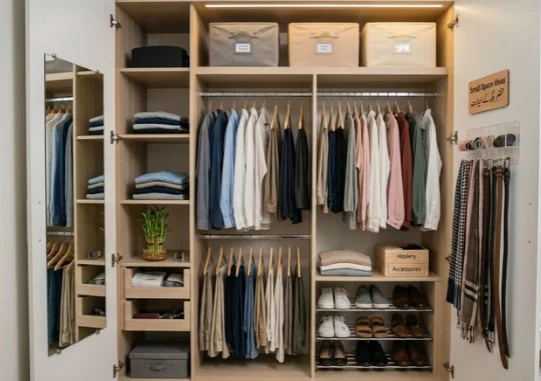
A tight storage area can hold far more when every shelf, wall, door, and vertical gap has a clear purpose. These small closet ideas focus on practical upgrades that work in U.S. homes, apartments, and rentals. Most options require no major remodeling or expensive custom cabinetry.
Quick answer: Start by removing unused items, then divide the available height with extra rods and adjustable shelving. Use slim hangers, door storage, labeled bins, and dedicated shoe space. Keep everyday pieces between waist and eye level. Reserve the highest shelves for seasonal items you need less often.
| Upgrade | Best For | Cost Level | Main Benefit |
|---|---|---|---|
| Double hanging rods | Shirts, pants, skirts | Low | Uses wasted vertical space |
| Slim hangers | Packed hanging sections | Low | Creates more usable rod space |
| Shelf dividers | Sweaters, bags, linens | Low | Stops stacked items from collapsing |
| Door organizers | Shoes and accessories | Low | Uses an overlooked surface |
| Adjustable shelving | Mixed wardrobes | Medium | Changes as storage needs change |
| Drawers or bins | Small loose items | Low, Medium | Reduces visual clutter |
| Better lighting | Deep or dark storage | Low, Medium | Makes everything easier to find |
Key Takeaways
- Measure the usable width, height, and depth before buying organizers.
- Give your most frequently used clothes the easiest-to-reach positions.
- Divide tall open areas instead of leaving unused vertical gaps.
- Use matching slim hangers when a hanging rail feels crowded.
- Keep shoes off the main floor whenever practical.
- Choose removable organizers when you rent.
- Leave some open space so the system remains easy to maintain.
15 Small Closet Ideas That Make Every Inch Work Harder

Current organization guidance consistently emphasizes vertical storage, slimmer hangers, over-the-door hooks, and better zoning. Modern design coverage also recommends planning around what you actually own instead of buying organizers first. To transform a tight space into an efficient storage hub, smart small closet ideas focus on inventorying wardrobe categories, adding multi-tiered hanging rods, and utilizing clear or labeled shelf dividers.
1. Measure the Space Before Buying Anything
Measure the usable width, depth, and height rather than relying on the opening dimensions. Include door hinges, trim, baseboards, brackets, and any wall returns. Those details determine whether shelves, drawers, and hanging systems will operate properly.
Next, measure the items that need permanent storage. Long dresses need different space than folded jeans or short shirts. Planning around your wardrobe prevents attractive organizers from becoming expensive obstacles.
RoomDome’s guide to designing a wardrobe around your available space covers similar planning principles.
2. Add a Second Hanging Rod
Many basic reach-in layouts have one rod with unused air underneath shorter garments. A second rail can divide that height between shirts and shorter pants. This change can improve capacity without taking additional floor area.
Keep longer coats, dresses, and jumpsuits in one uninterrupted section. Place double hanging space beside that zone instead of across the entire width. Your layout then supports different garment lengths without crowding them.
3. Switch to Slim, Matching Hangers
Bulky wooden and plastic hangers consume valuable rail width. Slim non-slip styles reduce that footprint while keeping clothing aligned. Matching hangers also make gaps and overcrowded areas easier to spot.
Recent organizing advice continues to recommend this upgrade because it requires no construction. It can be completed section by section instead of replacing everything at once.
4. Extend Storage Toward the Ceiling
High shelves work well for luggage, seasonal clothes, spare bedding, and rarely used accessories. Use matching bins so small pieces stay contained and easy to retrieve. Labels prevent you from opening several containers to find one item.
Avoid putting everyday clothing at the highest level. Frequent reaching makes an organization system annoying to maintain. Store daily items between roughly waist and eye level whenever the layout allows.
5. Use the Back of the Door
The door can provide valuable storage without reducing hanging capacity. Over-the-door racks work for shoes, scarves, belts, bags, and small accessories. Hooks can hold tomorrow’s outfit or frequently used pieces.
Check the clearance before choosing an organizer. A thick rack can collide with shelves or garments when the door closes. Renters should also check whether hardware can be installed without permanent changes.
RoomDome’s renter-friendly renovation ideas include removable storage approaches for homes where drilling isn’t practical.
6. Create a Dedicated Shoe Zone
Shoes scattered across the floor make a narrow area harder to use. A low rack, vertical tower, or hanging organizer keeps pairs visible. Choose the format that matches the number and height of shoes you own.
Keep frequently worn pairs easiest to reach. Special-occasion footwear can sit higher or farther back. This arrangement protects clear floor space and makes morning routines faster.
7. Add Shelf Dividers
Wide shelves often become unstable piles of sweaters, denim, handbags, or towels. Dividers create narrower sections that prevent one stack from falling into another. They also provide a natural limit for each category.
Use dividers where folding makes more sense than hanging. Heavy sweaters, jeans, and structured bags often fit that approach well. Keep each category narrow enough that removing one piece doesn’t disturb everything beside it.
8. Build Storage Around Your Actual Wardrobe
Don’t divide every storage area into equal sections. Someone with twenty shirts needs a different layout from someone storing dresses, shoes, or folded workwear. Count your main categories before assigning rods and shelves.
RoomDome’s wardrobe-planning advice also recommends identifying storage needs before finalizing a design. This step prevents wasted compartments and improves long-term usability.
9. Use Drawers or Bins for Small Items
Loose socks, underwear, workout gear, and accessories can make open shelves look crowded. Drawers hide those smaller categories while keeping them grouped. Bins provide a simpler option when built-in drawers aren’t available.
Give every container one clear purpose. Broad labels such as “miscellaneous” usually become clutter magnets. More specific groups make items easier to return after laundry day.
10. Improve the Lighting
Dark corners can make an organized storage area difficult to use. Bright, even lighting helps you distinguish colors and find items quickly. Battery-powered or rechargeable fixtures can work where electrical changes aren’t practical.
Recent design advice also emphasizes lighting as a functional improvement in compact storage areas. Choose fixtures that don’t interfere with doors, rods, shelves, or stored fabrics.
11. Consider Adjustable Shelving
Fixed shelves can leave awkward gaps when your wardrobe changes. Adjustable systems let you move shelves as categories grow or shrink. They work especially well for shoes, folded clothing, bags, and storage boxes.
Measure your largest regularly stored item before choosing spacing. Then leave enough clearance to remove it comfortably. Storage becomes less useful when every shelf requires careful maneuvering.
12. Replace Space-Hungry Doors Where Practical
Swinging doors need clear floor area in front of the opening. Sliding, bifold, or pocket configurations may improve access in tight bedrooms. The right choice depends on wall construction and the width of the opening.
RoomDome’s overview of pocket door systems for compact spaces explains how these doors reduce the space needed for door swings. Structural changes should still be evaluated before installation.
13. Keep the Floor as Clear as Possible
An open floor makes a narrow storage area easier to enter and clean. Move bags onto hooks, shoes onto racks, and boxes onto shelves. Avoid creating permanent piles beneath hanging garments.
If something must stay on the floor, give it a defined footprint. One laundry basket works better than several loose containers. Clear boundaries make clutter easier to notice before it spreads.
14. Use Built-In Storage When the Budget Allows
A custom or semi-custom system can combine rods, drawers, cubbies, and shelves within one footprint. This option works well when standard organizers leave large unusable gaps. It can also create a more finished appearance.
Built-ins aren’t necessary for every home. RoomDome’s guide to home improvements that include built-in storage shows how integrated storage can support a cleaner layout. Start with inexpensive changes before committing to permanent cabinetry.
15. Leave a Little Empty Space
Filling every inch may appear efficient, but it makes the system harder to use. Clothes need room to slide along rods, and shelves need room for easy removal. A small amount of open capacity gives new purchases somewhere to go.
Review the contents when sections become difficult to access. Donate, relocate, or store seasonal items elsewhere before adding another organizer. Good storage should reduce friction rather than hide increasing clutter.
A Simple Layout for a Small Reach-In Closet
A practical reach-in design can use three vertical zones. Place double rods on one side, adjustable shelves in the center, and full-length hanging space on the other. Add a top shelf across the width when the existing structure allows.
The center shelves can hold folded clothes, shoes, and labeled bins. The upper level can store seasonal pieces that aren’t needed every week. This layout combines accessibility with efficient vertical storage.
Compact reach-in designs commonly use this mix of hanging space, shelves, and drawers.
What to Do Before You Organize
Start by taking enough items out to see the available surfaces clearly. Sort everything into keep, relocate, donate, and discard groups. Don’t buy containers until you know what will return.
Next, group the remaining pieces by how you use them. Daily workwear should receive easier access than formal clothing worn twice yearly. This simple priority system makes the finished setup easier to maintain.
Clean the shelves, floor, rods, and doors before reinstalling anything. Then add organizers in stages rather than all at once. You can adjust the layout after seeing which categories need additional space.
Budget-Friendly Ways to Improve a Tiny Wardrobe
You don’t need custom cabinetry to improve a basic reach-in space. Start with slim hangers, a second rod, simple shelf dividers, and door hooks. Those upgrades address several common sources of wasted capacity.
Next, add matching bins only where loose items create disorder. Reuse suitable containers you already own before purchasing new ones. RoomDome also shares ideas for repurposing household items into useful storage.
Save permanent carpentry for problems that removable organizers cannot solve. This staged approach limits unnecessary spending and lets you test the layout first. It also works well for homeowners planning a later renovation.
Make the Space Fit Your Routine
The strongest storage system isn’t the one with the most bins or shelves. It is the one that makes frequently used belongings easy to see, reach, and return. Start with measurements, divide unused height, and improve one problem area at a time.
A thoughtful setup can make a modest wardrobe feel easier to use without increasing its footprint. Choose upgrades around what you own today, then leave room for your needs to change. That approach keeps the space organized long after the initial makeover.
Frequently Asked Questions About Small Closet Ideas
How can I make a small closet hold more?
Start with vertical space instead of adding more floor storage. Install a second rod for short garments, then use high shelves for seasonal items. Door organizers and slim hangers can recover additional usable space.
Avoid packing every section tightly. Crowded rods and shelves slow down everyday access and make organization harder to maintain. Keep some open capacity for movement and future items.
What should I put on the top shelf?
Store seasonal clothing, luggage, spare bedding, and infrequently used accessories there. Put smaller pieces inside labeled containers so nothing disappears behind larger items. Keep daily essentials on lower shelves.
Avoid placing heavy items where lifting them feels unsafe. High storage should contain things you can retrieve comfortably. A sturdy step stool may help where ceiling height allows.
How do I organize a small reach-in space?
Divide it into zones for short hanging clothes, long garments, folded pieces, shoes, and accessories. Give the easiest positions to items you use most often. Then use shelves and rods to reduce unused vertical gaps.
Don’t copy a layout that doesn’t match your wardrobe. Someone with many dresses needs more full-length hanging area. Someone with mostly shirts and pants may benefit more from double rods.
Are built-ins worth installing in a small space?
They can be worthwhile when standard organizers leave unusable gaps or don’t match your storage needs. Custom systems can combine drawers, rods, shelves, and shoe storage precisely. They also cost more and are harder to change.
Try removable upgrades first when your needs may change. Renters should usually prioritize nonpermanent solutions. Homeowners can consider built-ins after testing which storage zones they use most.