Pool shock is a concentrated treatment used when routine sanitation needs extra help. It can oxidize swimmer waste, reduce chloramines, and raise chlorine quickly when needed. The safest approach is to test first, follow the product label, and retest before anyone swims.
| Quick fact | What to know |
|---|---|
| Main purpose | Oxidize contaminants, reduce chloramines, or quickly raise sanitizer levels |
| Common types | Calcium hypochlorite, dichlor, liquid chlorine, and non-chlorine oxidizers |
| Best timing | Evening is often preferred for chlorine-based treatments |
| Pump status | Usually run circulation during treatment, unless the label says otherwise |
| Dosing | Calculate from pool volume and the exact product label |
| Swimming | Retest first and follow the product’s re-entry directions |
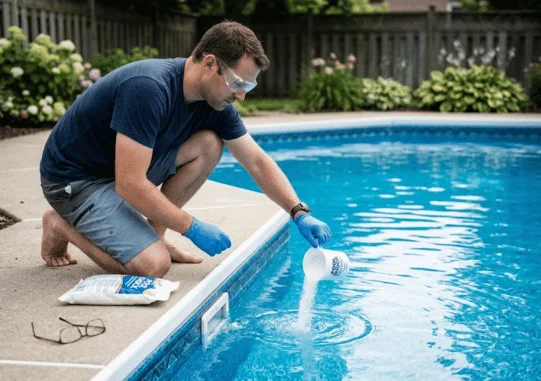
A shock treatment gives pool water a concentrated oxidation or sanitizing boost. Test the water, calculate the label dose from your pool volume, then add the product with circulation running. Keep swimmers out until the water meets the product’s re-entry instructions and your normal operating targets.
What a shock treatment does
Routine chlorine works continuously against germs and organic contamination in properly balanced water. Swimmer waste and other contaminants can bind with chlorine and create chloramines. The CDC notes that chloramines can irritate eyes, skin, and airways around treated water.
Shocking can raise free chlorine enough to break down combined chlorine when superchlorination is appropriate. A non-chlorine oxidizer can also break down certain contaminants without adding chlorine. It does not replace the need to maintain an effective sanitizer level.
Types of shock and when each one fits
| Type | What it adds | Useful when | Watch for |
|---|---|---|---|
| Calcium hypochlorite | Chlorine and calcium | You need a strong chlorine treatment, and calcium is not already high | Product-specific dissolving rules, calcium buildup |
| Dichlor | Chlorine and cyanuric acid | Stabilized chlorine fits your current water chemistry | Repeated use can raise stabilizer levels |
| Liquid chlorine | Chlorine | You want chlorine without adding calcium or stabilizer | Strength varies by product and storage age |
| Potassium monopersulfate | Oxidizer without chlorine | You want supplemental oxidation | It does not replace routine sanitizing chlorine |
Match your product choice to your latest water test, not the front label alone. Dichlor adds cyanuric acid, while calcium hypochlorite contributes calcium. Potassium monopersulfate oxidizes contaminants but still requires normal sanitizer management. Calcium buildup over the seasons can leave scale on pool surfaces, a problem RoomDome covers in its pool resurfacing guide.
When should you shock your pool?
A treatment can make sense after heavy swimming, for certain water-quality problems, or when you see visible algae. It can also help when testing shows high combined chlorine that needs corrective treatment. You should diagnose the water first instead of following an automatic calendar.
Common reasons include:
- Visible algae or water that is turning green.
- Combined chlorine that remains high after normal maintenance.
- Free chlorine that has fallen below your pool’s operating target.
- Heavy swimmer use that creates a large contaminant load.
- Storm debris, heavy rain, or other events that disrupt water balance.
- Seasonal opening or recovery after neglected circulation and sanitation.
Strong chlorine odor alone does not prove that the water has too much usable chlorine. The smell often comes from chloramines formed when chlorine reacts with swimmer waste. Testing free and total chlorine gives you better information than smell.
How to use pool shock in 7 safe steps
- Test the water. Measure free chlorine, total chlorine, pH, and other values your product requires.
- Confirm pool volume. Use gallons, because U.S. product labels usually base dosing on a stated gallon range.
- Read the entire label. Check the active ingredient, protective gear, preparation method, dose, circulation time, and re-entry rules.
- Balance water if required. Many chlorine treatments work best within a suitable pH range, but follow the specific label.
- Start circulation. Run the pump and filter if the product directions call for active circulation during treatment.
- Add exactly as directed. Never mix pool chemicals, and never pre-dissolve a product unless its label permits or requires it.
- Retest before swimming. Confirm chlorine and pH have returned to acceptable operating levels before reopening the pool.
These steps put the product label ahead of generic instructions that may not fit your formulation. CDC guidance also recommends protective equipment and careful separation of pool chemicals. Different products can require different preparation methods, so read the package before opening it.
Evening application is often useful for chlorine-based treatments because sunlight can reduce chlorine levels. That does not override label directions for a specific product. Keep children and pets away while measuring, mixing, applying, and storing chemicals.
How much shock should you use?
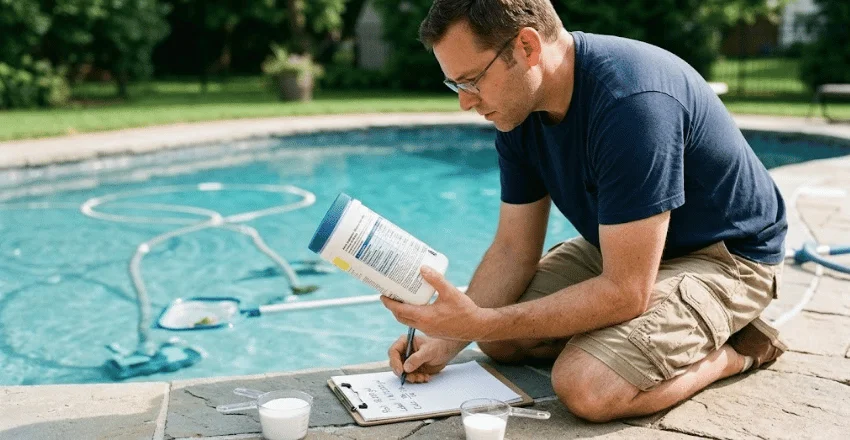
No universal dose safely fits every bag, bucket, or pool condition. Active ingredient strength and the treatment goal can change the required amount. A label-based calculation is more reliable than copying a generic online rule.
Use a simple ratio when the label gives a dose by pool volume. First, divide your pool volume by the label’s gallon amount. Then multiply that result by the stated dose.
Pool gallons ÷ label gallons × label dose = amount to add
For example, suppose one label says one pound treats 12,000 gallons for a stated condition. An 18,000-gallon pool would require 1.5 pounds under that exact label direction. Do not transfer that example to another product with a different active ingredient or concentration.
Some labels also give different doses for routine oxidation, algae treatment, or severe contamination. Follow the line that matches your actual water condition and pool type. If the package is unclear, contact the manufacturer or a qualified pool professional before dosing.
Why label directions matter more than generic advice
Online guides often disagree about whether to dissolve granular products in a bucket first. That disagreement exists because different formulations carry different handling instructions. Some granular products carry a label that specifically says not to pre-dissolve them before use.
Never assume two bags labeled “shock” are interchangeable. Mixing incompatible pool chemicals can cause fire, toxic gas, or serious injury. The CDC advises keeping chemicals separate and following manufacturer directions for handling and storage.
When can you swim again?
Do not rely on a fixed number of hours after treatment. Test the water and follow the product’s re-entry instructions before anyone enters. The CDC guidance on home pool water treatment and testing recommends a chlorine concentration of at least 1 ppm and a pH of 7.0 to 7.8 in pools.
Pools using cyanuric acid need different minimum chlorine guidance from unstabilized pools. The CDC recommends at least 2 ppm chlorine when using cyanuric acid. Your product label and local requirements may call for a different target or waiting period.
Clear water also matters before reopening the pool. Swimmers and supervisors should be able to see the bottom and drain area. Cloudiness can hide water-quality problems and create a separate visibility hazard.
Common mistakes that waste chemicals or create risk
- Adding a treatment before testing the water.
- Guessing pool volume instead of calculating it.
- Mixing different chlorine products or other pool chemicals together.
- Pre-dissolving a product when the label says not to.
- Adding chlorine in strong midday sun when the label allows evening use.
- Turning circulation off when the label requires the pump to run.
- Letting swimmers return based on time alone instead of a fresh test.
Chemical balance is only one part of keeping a backyard pool in good condition. RoomDome’s poolside flooring guide compares several surfaces for wet outdoor areas. Worn decking and slippery surfaces create hazards that no water treatment can correct.
The site’s landscaping section can also help with the area surrounding a pool. That matters because debris, drainage, and surface choices can affect daily maintenance. Treat water care and the surrounding space as one connected maintenance plan.
Routine chlorine versus shock treatment
Routine sanitizer maintains a protective disinfectant level during normal operation. Use a concentrated treatment to correct specific contamination or oxidation problems. Do not replace one with the other in a healthy maintenance plan.
A saltwater pool still uses chlorine, even though it generates chlorine from salt. It may still need corrective treatment when contamination overwhelms normal chlorine production. Test results and equipment guidance should drive that decision.
FAQs
Is pool shock the same as chlorine?
Not always, because “shock” describes a treatment purpose rather than one single chemical. Many products use chlorine ingredients such as calcium hypochlorite or dichlor. Non-chlorine oxidizers can also be sold for shock treatment.
How often should I shock my pool?
No single schedule fits every residential pool. Usage, weather, sanitizer demand, and water-test results all affect the need. Follow your sanitizer plan and the treatment label instead of shocking on a set schedule.
How much shock do I need for 10,000 gallons?
Use the exact dose printed on your product for the condition you are treating. Different formulas can specify different amounts for the same pool volume. Multiply the label dose by your pool volume ratio rather than assuming one standard pound.
Should the pump run while I shock the pool?
Many product directions call for running the pump and filter during treatment and afterward. Circulation helps distribute chemicals through the water and filtration system. Follow the label because required circulation time can differ.
Can I shock the pool during the day?
You can follow any timing allowed by the product label. Evening is often preferred for chlorine treatments because sunlight can consume unstabilized chlorine. Non-chlorine products and stabilized products can have different timing considerations.
What if the water stays green after treatment?
Persistent green water can point to inadequate sanitizer, poor circulation, filtration problems, or an incorrect dose. Retest the water before adding more chemicals. Brush surfaces, inspect the filter, and get professional help if repeated treatment doesn’t clear the problem.
A safer next step
Start with a complete water test and an accurate estimate of your pool volume. Then choose a treatment that fits those readings and follow its U.S. label from start to finish. Retest before swimming, and never mix products to speed the process.
If your readings do not make sense, stop adding chemicals and take a new sample. Ask the manufacturer or a qualified pool professional to review the results. A second check costs less than correcting an overdose or an incompatible chemical mix.