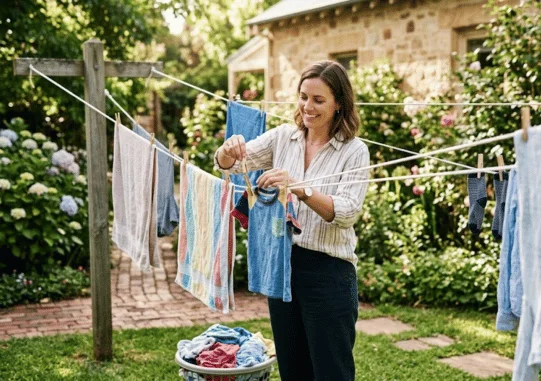
A clothes line can cut dryer use, free indoor space, and give delicate laundry a gentler drying option. The right design depends on your available space, mounting points, laundry volume, and local property rules. You may also see the term written as “clothesline,” which is the common one-word spelling.
Quick answer: For most U.S. homes, a retractable clothes line offers the best balance of space, convenience, and everyday drying capacity. A rotary model suits larger yards and frequent family loads. A fixed rope or cable line costs less, while portable designs work better for renters, travel, and temporary spaces.
| Type | Best for | Installation | Main advantage | Main tradeoff |
|---|---|---|---|---|
| Fixed rope or cable | Yards and low budgets | Posts, trees, or secure anchors | Simple, durable setup | Stays visible and needs tension |
| Retractable | Patios, small yards, laundry rooms | Two secure mounting points | Stores out of sight | Capacity depends on hardware |
| Rotary umbrella | Larger yards and family loads | Ground socket or spike | Large drying area | Needs turning clearance |
| Pulley | Porches, side yards, longer runs | Two pulley anchors | Brings the line toward you | More hardware and tensioning |
| Portable or travel | Renters, RVs, hotels, camping | Hooks, clips, or temporary anchors | No permanent fixture | Better for lighter loads |
Five Clothesline Types Compared
Current U.S. shopping results show strong demand for retractable, portable, rope, and rotary systems. Major retailer listings and 2026 review roundups group the market into those same core formats. That mix suggests shoppers need help choosing a format, not another long list of products.
1. Fixed Rope or Cable Lines
Fixed lines use rope, coated cable, or wire stretched between stable supports. They suit homeowners who want low cost, simple maintenance, and full-time outdoor drying space. They need careful tensioning because long spans can sag under wet towels or bedding.
2. Retractable Clotheslines
Retractable models pull from a compact wall housing and lock onto an opposite anchor. They work well where you want drying space without a permanent visual line. Look for a locking mechanism, stated wet-load capacity, and mounting hardware suited to the surface.
3. Rotary Umbrella Clotheslines
Rotary umbrella dryers place several lines around folding arms on a central post. They provide substantial drying space without requiring a long straight run. They suit households that wash larger loads and have open yard space.
4. Pulley Clotheslines
Pulley systems run a continuous line around two wheels. You stand at one point and bring empty sections toward you while loading. This can work well along porches, side yards, and longer runs with secure anchors.
5. Portable and Travel Clotheslines
Portable lines use hooks, clips, elastic cord, or compact retractors. They suit renters, camping, RV trips, hotels, and occasional indoor drying. Their lighter construction is better for smaller loads than heavy wet bedding.
How to Choose a Clothes Line for Your Home
Start with where the wet laundry will hang, not with the product style. Measure the clear span and inspect walls, posts, fences, doors, or railings before buying. If mounting changes the property, review your lease, HOA rules, and local requirements first.
| Buying factor | What to check |
|---|---|
| Space | Allow room for airflow, loading, walkways, and moving doors. |
| Laundry volume | Plan around the manufacturer’s capacity and your heaviest usual load. |
| Mounting surface | Match anchors and fasteners to wood, masonry, studs, or approved materials. |
| Weather exposure | Choose hardware and line materials intended for the installation location. |
| Storage preference | Decide whether the line can remain visible or should disappear after use. |
A clothesline is a small project, but the planning resembles other functional upgrades. RoomDome’s home improvement ideas focus on matching changes to how you use a space. Apply that same rule here, especially when choosing between permanent hardware and removable equipment.
Set Up the Line to Reduce Sag and Slow Drying
Good performance starts with strong anchors, a taut line, and open airflow around the fabric. Avoid mounting where doors, grills, vehicles, or busy walkways can interfere with laundry. Keep the line reachable without requiring a stool during normal loading.
- Choose secure supports. Use sound posts, framing, or approved anchors for the surface.
- Measure the span. Stay within the manufacturer’s stated maximum distance.
- Install suitable hardware. Use fasteners designed for the wall, post, or structure.
- Set the tension. Follow the product instructions and remove unnecessary slack.
- Test the setup. Start with a small load before hanging heavier items.
Leave space between garments instead of packing them edge to edge. Wind and moving air speed evaporation, while crowded fabric traps moisture longer. Split heavy items across separate sections when that helps reduce sag.
Outdoor Versus Indoor Air-Drying
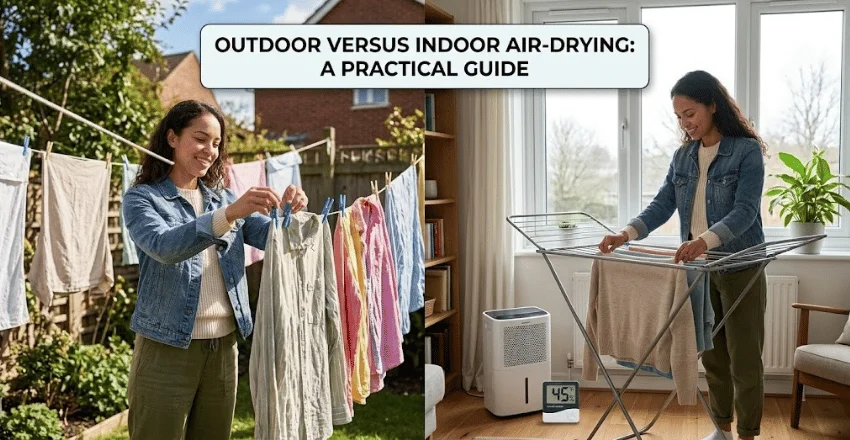
Outdoor drying offers sun and moving air without adding moisture to your living space. Weather, pollen, dust, and privacy can still make outdoor use less practical on some days. Limit strong sun exposure for dark garments when color fading is a concern.
Indoor drying is useful during rain, winter, or apartment living, but ventilation matters. The EPA recommends indoor humidity below 60 percent, ideally between 30 and 50 percent. RoomDome’s pink mold guide also explains why persistent indoor moisture deserves attention.
If laundry raises room humidity, increase ventilation or use a dehumidifier. Avoid crowding wet garments against walls, curtains, or upholstered furniture. RoomDome’s drying water damage guide explains how airflow, temperature, and humidity affect evaporation.
Does Air-Drying Reduce Dryer Use?
Yes, line drying replaces some or all machine-drying time for suitable loads. ENERGY STAR notes that clothes dryers are common in U.S. homes. Using a line for part of the laundry can reduce how often the machine runs.
A hybrid routine can work when you prefer softer towels or faster finishing. Some households air-dry most items, then use a short tumble to remove wrinkles or add texture. Always follow the garment care label before choosing heat, direct sun, hanging, or flat drying.
Protect Fabrics While They Dry
Air-drying avoids tumbling and high heat, but it still needs sensible fabric handling. Turn dark garments inside out and place clothespins where marks will be less visible. Follow “dry flat” care labels for sweaters or knits that should not hang.
Make sure thick seams, waistbands, pockets, and folded areas feel fully dry before storage. Damp fabric inside a closet can add unwanted moisture and odors. Give bulky pieces extra spacing and drying time before putting them away.
Common Clothesline Mistakes to Avoid
Most problems come from placement and loading, not the basic idea of line drying. Sagging, slow drying, and damaged hardware often follow preventable setup choices. A quick check before each load keeps the system easier to use.
| Common mistake | Better approach |
|---|---|
| Hanging more wet weight than the product allows | Stay within the stated load rating. |
| Using weak or mismatched anchors | Use hardware approved for the mounting surface. |
| Stretching a long span without support | Add proper tension or suitable support. |
| Bunching garments together | Leave room for air to move between items. |
| Leaving retractable hardware extended in storms | Store the line when conditions turn rough. |
| Drying large indoor loads without moisture control | Watch ventilation and indoor humidity. |
Which Type Is Best? The Practical Verdict
For most households needing flexible space, a retractable clothesline is the strongest starting point. It disappears after use and works indoors or outdoors when mounting is secure. Choose a model with a clear wet-load rating and hardware suited to your wall or post.
A rotary dryer makes more sense for frequent family loads and a yard with turning clearance. A fixed line is the simplest choice when low cost matters more than appearance. Renters and travelers should start with a portable line that avoids permanent changes.
Before buying, measure the span, inspect the anchors, and estimate your heaviest usual load. Then choose the smallest system that handles that job without crowding. Keep those measurements on your phone as you compare models, hardware, and installation requirements.
Frequently Asked Questions
What Is the Best Clothes Line for a Small Backyard?
A retractable model often fits small yards because the line disappears when you’re done. Choose the shortest unit that still covers your normal laundry volume. Make sure both mounting points can handle the manufacturer’s rated load.
Is a Rotary Clothesline Better Than a Retractable One?
A rotary model usually offers more drying area in a compact yard footprint. A retractable model takes up less visual space when stored. Choose based on laundry volume, open clearance, mounting options, and how often you dry outside.
How Do I Stop a Clothesline From Sagging?
Start with strong anchors and keep the span within the product’s stated limit. Set tension according to the manufacturer’s instructions before loading wet laundry. Long fixed lines may benefit from a tensioner, spreader, or suitable center support.
Can I Dry Clothes Indoors on a Line?
Yes, but indoor moisture needs attention. Use ventilation, an exhaust fan, or a dehumidifier when humidity starts climbing. Keep garments spaced apart and avoid pressing wet fabric against walls or furniture.
Does Line Drying Save Energy?
Line drying uses no dryer energy while the laundry hangs and dries. Savings depend on how often you replace full or partial machine-drying cycles. A mixed routine can still reduce dryer runtime without changing every laundry habit.
Do I Need Permission to Install an Outdoor Clothesline?
Requirements vary by lease, HOA, property type, and location. Check written rules before drilling, adding posts, or attaching hardware to shared structures. Renters should get permission for permanent changes when their lease requires it.
Make the Setup Fit Your Laundry Routine
The right clothesline should fit your space, usual load, and willingness to install permanent hardware. Retractable systems suit flexible spaces, while rotary and fixed lines handle larger outdoor routines well. Portable lines remain the easiest choice when you cannot make permanent changes.
Measure first, check the rules, and buy around the heaviest load you expect to hang. Keep indoor humidity controlled and give every garment room to move. Those simple choices make air-drying easier, safer, and more practical year-round.