

Knowing how to remove stains from carpet can save a spill from becoming a permanent-looking mark. The safest method starts with blotting, not scrubbing, and uses as little cleaner and moisture as necessary. Your best treatment depends on the spill, the carpet fiber, and how long the stain has been sitting.
To remove a carpet stain, first lift solids and blot liquid with a clean white cloth. Test your cleaner in a hidden area. Work from the outside edge inward with a stain-appropriate solution. Rinse lightly with clean water, blot dry, and repeat instead of scrubbing or soaking.
| Stain or situation | First move | Treatment approach | Avoid |
| Fresh liquid spill | Blot immediately | Mild carpet-safe cleaner | Rubbing |
| Coffee or red wine | Blot, then rinse lightly | Mild detergent solution | Flooding the area |
| Blood | Use cold water | Blot and repeat gently | Hot water |
| Pet urine | Absorb moisture quickly | Carpet-safe detergent, then rinse | Heavy soaking |
| Grease or oil | Lift excess material | Product made for oily stains | Water alone |
| Old stain | Rehydrate lightly | Repeat mild treatments | Aggressive scrubbing |
| Unknown stain | Test first | Start with the mildest option | Mixing cleaners |
Key Takeaways
- Blot stains rather than rubbing or scrubbing the carpet.
- Test every cleaning solution in a hidden spot first.
- Start with the mildest treatment suitable for the stain.
- Keep moisture controlled so liquid does not reach the carpet pad.
- Rinse cleaning residue because leftover soap can attract new soil.
- Treat protein-based spills with cool or cold water.
- Seek professional help when a stain keeps returning, or the carpet is delicate.
What You’ll Need Before Treating a Carpet Stain
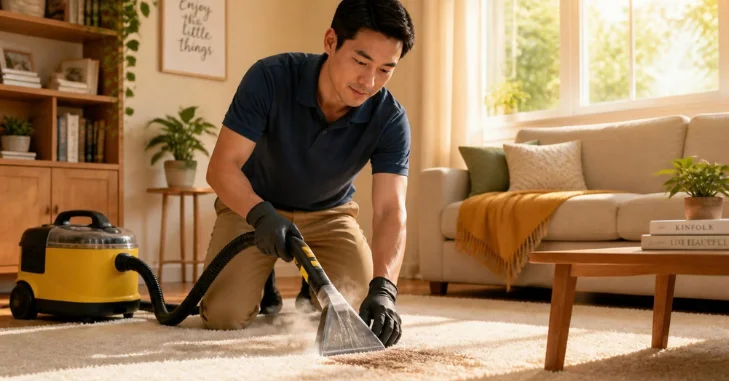
A small stain-removal kit makes spills easier to handle before they spread. If you’re learning how to Remove Stains From Carpet, keep clean white cloths, plain paper towels, a spoon, water, and mild dishwashing liquid nearby. A spray bottle also helps you control how much liquid reaches the fibers.
Also check the carpet manufacturer’s care instructions before trying a new product. Different fibers and dyes can react differently to water, acids, solvents, and oxidizing cleaners. RoomDome’s polyester carpet care guide explains why fiber type affects cleaning choices.
Useful supplies include the following.
- Clean white microfiber cloths.
- White paper towels without printed designs.
- A rounded spoon or dull scraper.
- Cool and lukewarm water.
- Mild liquid dishwashing detergent.
- A spray bottle.
- Dry towels.
- A wet vacuum, if available.
- A manufacturer-approved carpet spot cleaner.
The Carpet and Rug Institute recommends white absorbent materials because colored cloth can transfer dye to damp carpet. It also recommends testing cleaners on a hidden area before treating a visible section. Scrubbing can distort or fray carpet pile.
How to Remove Stains From Carpet: 7 Safe Steps
Most household spills respond better to a controlled process than to harsh chemicals. Too much cleaner can leave residue or push the spill deeper. Follow these steps before moving to a stronger treatment.
- Remove excess material. Scoop up food or other solids with a rounded spoon—vacuum dry material before adding moisture.
- Blot the liquid. Press a clean white cloth onto the spill and lift it straight upward. Keep changing to a clean section.
- Identify the stain. Determine whether you are dealing with food, wine, blood, grease, urine, ink, or an unknown substance.
- Test the cleaner. Apply a small amount in a hidden section. Stop if the carpet changes color or texture.
- Treat from the outside inward. Apply cleaner to a cloth rather than pouring it over the carpet. Work toward the center.
- Rinse the treated area. —Blot with a small amount of clean water. Remove as much moisture and cleaning residue as possible.
- Dry the spot fully. Press the area with dry towels and allow it to air-dry. Repeat the treatment after it dries, if needed.
This method follows the basic approach recommended by the Carpet and Rug Institute. Its guidance stresses quick action, controlled application, blotting, and a final rinse. Repeating a mild treatment is usually safer than saturating the carpet once.
Match the Treatment to the Type of Stain
Carpet stain removal works better when the cleaner matches the material causing the mark. Coffee doesn’tbehave like grease, and blood doesnn’tehave like ink. Identifying the spill reduces unnecessary experimentation.
Coffee and Red Wine
Blot fresh coffee or wine immediately with clean white material. Add a small amount of clean water and blot again before using a carpet-safe spot treatment. Continue working from the outer edge toward the middle to limit spreading.
A mild detergent solution can help with many water-based household spills. The Carpet and Rug Institute uses one-quarter teaspoon of liquid dishwashing detergent per cup of lukewarm water in several spot-removal instructions. The Rinse the areal bec,aasergent residue can attract soil.
Pet Urine
Absorb fresh urine with plain white paper towels before applying another product. Treating the surface quickly can limit how deeply the liquid moves into the backing and pad. Avoid pouring large amounts of solution over the affected area.
The Carpet and Rug Institute recommends a mild dishwashing-detergent solution followed by careful rinsing for urine spots. Its technical guidance also includes a diluted white-vinegar treatment after the detergent step. Older pet stains can permanently affect some carpet dyes, so complete removal is not always possible.
For lingering smells after the visible mark is gone, see RoomDome’s natural carpet odor removal guide. Odor and discoloration may require different treatments. Treating both problems separately can prevent unnecessary product buildup.
Blood
Start blood stains with cold water, not hot water. Blot carefully, using only enough moisture to transfer the stain to a clean cloth. Repeat the process instead of scrubbing the fibers.
Protein-based stains can become harder to remove after heat exposure. Current carpet-cleaning guidance also commonly recommends cold water for blood stains. Keep heated extraction away from the spot until you know the remaining stain can tolerate it.
Grease and Oil
Lift or blot excess grease before applying a cleaning product. Water alone often struggles to lift oily material from carpet fibers. A carpet-safe product designed for oily spots is a better next step.
Do not pour strong solvents directly onto the carpet or backing. Some solvent products can affect adhesives and carpet construction when used incorrectly. The Carpet and Rug Institute recommends careful spot treatment and thorough rinsing after suitable cleaners.
Ink and Mystery Stains
Unknown stains deserve a conservative approach because the wrong chemical can spread dye or damage fibers. Start by testing a mild carpet cleaner in a hidden location. Stop when color transfers from the carpet itself onto your test cloth.
Ink can require a specialized treatment, especially after it has dried. The Carpet and Rug Institute advises caution with solvents and recommends professional help for stubborn spots. Avoid experimenting with several chemicals on the same area.
How to Treat Old, Set-In Carpet Stains
Old carpet stains need patience because dried material has had more time to settle into the pile. Lightly dampen the spot to soften removable residue, then blot before applying cleaner. Do not soak the backing while trying to rehydrate the mark.
Apply a tested cleaner in small amounts and let it work. Blot, rinse lightly, and let the carpet dry before deciding whether you need another treatment. Several controlled passes are safer than one aggressive cleaning attempt.
A stain that remains after repeated treatment may involve permanent dye change rather than removable soil. Pet urine, bleach, hair color, and some dyes can alter carpet color instead of sitting on the fibers. Professional cleaning cannot always reverse chemical color loss.
Why a Carpet Stain Can Come Back After Cleaning
A mark can disappear while the carpet is wet and return after drying. This often happens when liquid deeper in the carpet moves upward through the fibers as it dries. Cleaning residue can also capture fresh dirt and create a dark spot in the same location.
This return is often called wicking, especially when the original spill reached the backing or pad. Blotting out excess moisture and allowing it to dry thoroughly reduces the chance of recurrence. Rinsing leftover detergent also helps prevent rapid resoiling.
If the same patch returns several times, stop adding more household cleaner. Deep contamination may require extraction equipment that can reach material below the visible pile. Repeated saturation can worsen the moisture problem.
Carpet-Cleaning Mistakes to Avoid
Most damage happens because a stain receives too much force, liquid, heat, or chemistry. Stronger treatment doesn’t automatically produce a cleaner carpet. Slow, controlled cleaning gives you more opportunities to stop before damage occurs.
Avoid these common mistakes.
- Scrubbing aggressively with a stiff brush.
- Pouring cleaner directly onto a small spot.
- Using hot water on an unidentified stain.
- Skipping the hidden-area test.
- Leaving detergent in the carpet.
- Applying several chemical products together.
- Overwetting the carpet and pad.
- Using bleach without manufacturer approval.
Never mix cleaning products casually. CDC workplace-cleaning guidance warns against mixing different cleaning products and specifically warns against combining bleach and ammonia. Read product labels and rinse thoroughly before changing treatments.
When to Call a Professional Carpet Cleaner
DIY cleaning makes sense for many small, fresh household spills. Professional treatment becomes more useful when the stain covers a large area or keeps returning. Delicate carpets and unidentified stains also deserve added caution.
Consider professional cleaning when:
- The stain has reached the carpet pad.
- A strong odor remains after surface cleaning.
- The affected carpet is wool, antique, or otherwise delicate.
- Dye continues transferring during testing.
- Several DIY treatments have failed.
- The spill contains paint, strong dye, or an unknown chemical.
- Water damage affects a larger section of flooring.
Professional equipment can extract moisture and residue that ordinary blotting cannot reach. That matters when a spill has moved beyond the visible surface. RoomDome’s deep-cleaning tips for the home can also help you build stain treatment into a broader cleaning routine.
How to Prevent Future Carpet Stains
Fast cleanup becomes easier when the right supplies are already available. Keep white cloths and an approved spot cleaner where spills usually happen. Entrance mats can also reduce tracked soil before it reaches carpeted rooms.
Vacuum regularly so loose grit doesn’t get ground into the pile. Deal with spills before they dry, and keep food or drinks away from high-risk carpeted areas where practical. Follow your carpet manufacturer’s cleaning and warranty instructions.
A periodic deeper clean can remove general soil that ordinary spot treatment leaves behind. Keep deep cleaning separate from emergency stain removal because the goals are different. Spot cleaning targets one spill, while deeper cleaning addresses broader soil buildup.
Keep the Next Spill Small
A carpet stain is easier to manage when you respond quickly and avoid aggressive cleaning. Blot first, identify the spill, test the treatment, rinse residue, and let the carpet dry before repeating anything. That simple sequence protects the fibers while giving the stain-removal method time to work.
Keep a basic spot-cleaning kit in your home so you are not searching for supplies during a spill. Save stronger treatments for stains that genuinely require them. When the stain reaches deeper layers or repeatedly returns, professional extraction is the more sensible next step.
Frequently Asked Questions
How to Remove Stains From Carpet Without a Machine?
Start by removing solids and blotting liquids with a clean white cloth. Apply a small amount of a tested carpet-safe cleaner, then continue blotting from the outside inward. Finish by rinsing lightly with clean water, then dry the area thoroughly.
What Is the Best Homemade Carpet Stain Remover?
A weak liquid dishwashing-detergent solution is a practical starting point for many ordinary spills. The Carpet and Rug Institute specifies one-quarter teaspoon of liquid dishwashing detergent per cup of lukewarm water in several stain guides. Always test first,,thenen rinse to prevent residue.
Will Vinegar and Baking Soda Remove Old Carpet Stains?
They may improve some spots, but they are not a universal treatment for every carpet or stain. Vinegar is acidic, while baking soda can leave powder behind you don’t remove it completely. Check the carpet manufacturer’s instructions before using either product on a valuable or delicate carpet.
Can Hydrogen Peroxide Remove Carpet Stains?
Hydrogen peroxide can lighten some organic discoloration, but it can also affect carpet color. Test it in a hidden area and use it only when the carpet manufacturer permits that treatment. For dark, wool, or unknown carpet fibers, a manufacturer-approved cleaner is the safer choice.
Why Shouldn’t You Rub a Carpet Stain?
Rubbing can spread the spill and distort the carpet pile. Blotting lifts liquid vertically into an absorbent cloth with less friction. The Carpet and Rug Institute specifically advises blotting instead of scrubbing.