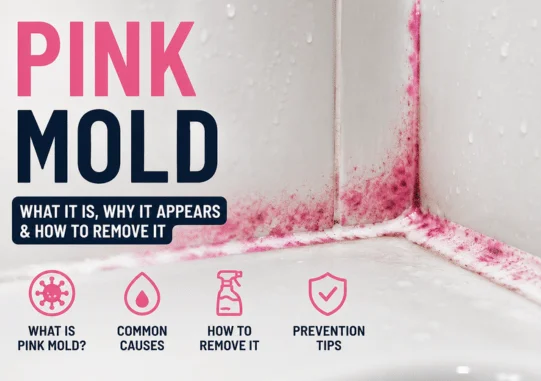
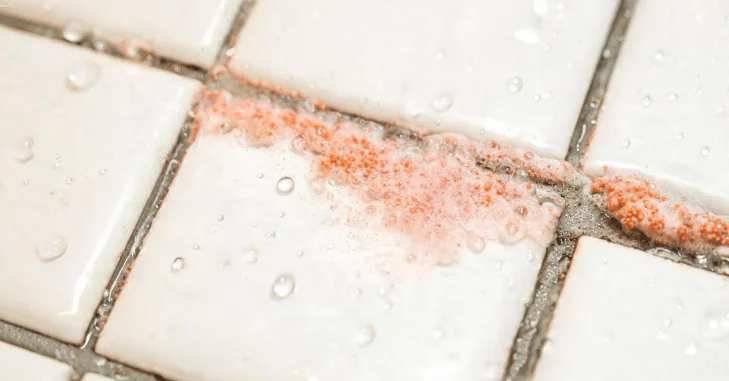
That rosy film along your caulk line showed up fast, and pink mold comes back within a week if you only wipe it. Pink mold is most of the time not a fungus at all. It is a bacterial slime living on the residue your soap leaves behind, and it clears in one short session with things you already own.
Key takeaways
- The pink film is almost always Serratia marcescens bacteria, not a fungus.
- Healthy skin shrugs it off. Eyes, open cuts, and weakened immune systems carry the real risk.
- Baking soda paste plus one disinfectant clears it in about 20 minutes.
- It regrows from three places you probably skipped: the showerhead, the drain,n and the curtain hem.
- Hold indoor humidity between 30 and 50 percent, and the cycle breaks.
Pink bathroom growth at a glance
| What it is | Where you see it | Risk level | What clears it? |
| Serratia marcescens, a bacterium | Caulk seams, grout, toilet rims, drain edges, pet bowls | Low on intact skin, higher for eyes, wounds,s and weak immunity | Baking soda scrub, then a disinfectant |
| Aureobasidium pullulans, a true fungus | Window frames, humidifier tanks, damp drywall, painted trim | Can irritate airways in sensitive people | Same scrub, plus fixing whatever stays wet |
| Iron or manganese in the water supply | Rings inside toilets and tubs, streaks below fixtures | None; it is a stain rather than a living colony. | An acidic descaler, then a water test |
What that pink stuff really is
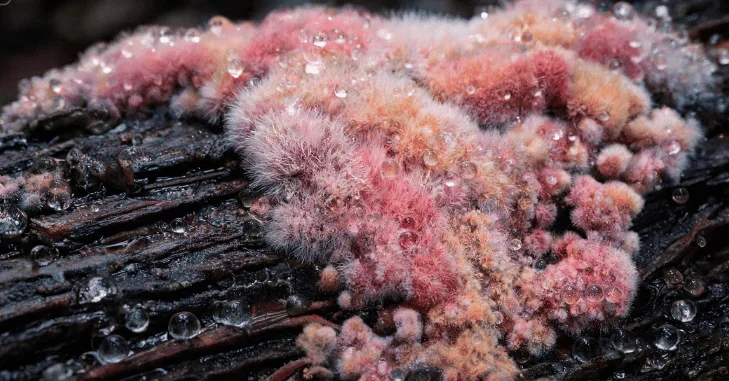
Serratia marcescens is a rod-shaped bacterium that lives in soil, dust, and water almost everywhere. It rides into your bathroom on air currents, then settles wherever water sits. In warm, damp, low-nutrient spots, it produces a red pigment called prodigiosin, which is why the colony reads as pink or salmon rather than black or green.
Soap is the buffet. The bacteria feed on fatty residue and phosphorus from bar soap, shampoo, and conditioner. That is why the film follows the drips: the bottle shelf, the corner of the tub, and the toilet water line.
A wipe test tells you which of the three you have. Drag a dry paper towel across the patch. A biofilm smears and lifts, leaving the surface underneath clean and its original color. True fungal growth stains the material, so caulk or drywall stays dark after wiping. Rust does not smear at all, and it traces the path water takes down the surface.
Is pink mold dangerous?
For most healthy adults, touching it in the shower is a low-risk event. Intact skin is a good barrier, and rinsing off afterward is usually the end of the story. This organism is opportunistic, which means it takes advantage of an opening rather than forcing one. Everything changes when it finds a way in.
Clinicians associate Serratia with urinary tract infections, wound infections, and eye infections, mostly in hospital settings and mostly in people whose defenses are already down. Infants, older adults, anyone on immune-suppressing treatment, and anyone with a catheter or an open wound should not be scrubbing a colonized shower.
Two habits deserve a second look. Never rinse contact lenses or their case with faucet water, and never leave a pet bowl to develop a slick ring, since your dog drinks from it daily. If a cut that touched the film turns red and swollen, or an eye becomes painful and weeps, call your doctor rather than waiting it out. The fungal version, Aureobasidium pullulans, is the bigger concern for anyone with asthma, and it shows up in humidifier tanks more than in tubs.
Why it keeps coming back to your bathroom
Three things have to line up at once: moisture, food, and time. A bathroom has all three between about 70 and 90 degrees Fahrenheit, which is ordinary room temperature after a hot shower. Slow drains, a dripping fixture, and a guest bathroom nobody uses give the water the standing time it needs.
Water chemistry matters more than most guides admit. Hard water leaves mineral deposits that give the film a rough surface to grip, and heavily filtered or softened water carries less chlorine residual, so the bacteria meet less resistance. Porous, aging surfaces make all of it worse. If your grout is crumbling and your fan barely moves air, a few targeted bathroom upgrades fix the cause instead of the symptom, and they pay you back at resale.
How to get rid of pink mold in about 20 minutes
What you’ll need
- Rubber gloves and eye protection
- Half a cup of baking soda and a tablespoon of liquid dish soap
- A soft-bristle brush, plus an old toothbrush for seams
- One disinfectant, chosen before you start: chlorine bleach, 3 percent hydrogen peroxide, or white vinegar
- A spray bottle, a microfiber cloth, and a squeegee
The steps
- Turn on the exhaust fan, open a window, and put on your gloves and eye protection.
- Clear the enclosure: bottles, razors, mats, T-shirts, and the curtain liner all come out.
- Stir the baking soda and dish soap into a thick paste.
- Spread the paste over every pink patch and let it sit for two minutes.
- Scrub with the brush, then work the toothbrush along grout lines and caulk seams.
- Rinse with the hottest water the faucet will give you.
- Spray your disinfectant, half a cup of bleach per gallon of water or peroxide straight from the bottle, and leave it for 10 minutes.
- Rinse again, then dry every surface with the microfiber cloth and squeegee.
Hands-on time runs about 20 minutes, including the soak. Skip the drying step, and you have watered your next colony.
The three places it hides
Scrubbing the walls alone is why the film is back by next weekend. Unscrew the showerhead and soak it overnight in white vinegar, or bag the vinegar around it if it will not come loose. Pour a kettle of boiling water down the drain, follow with baking soda, and let it sit. Then machine wash the curtain liner on hot, because the hem sits in a puddle every single day.
Never mix your cleaners.
This is the warning most cleaning guides leave out while recommending four products on one page. Bleach and vinegar together release chlorine gas. Bleach and ammonia, which hide in many glass and multi-surface sprays, release chloramine vapors. Both can burn your airways in a small room with the door shut.
Pick one disinfectant per session. If you change your mind halfway, rinse the surface thoroughly with plain water first and give the fan a few minutes to clear the air.
How to stop it coming back
Prevention here is a humidity problem, not a cleaning problem. The US Environmental Protection Agency puts numbers on the target. Its guidance is to keep indoor relative humidity below 60 percent, ideally between 30 and 50 percent. Wet material should be dried within 24 to 48 hours of a leak or spill. A $12 hygrometer on the vanity turns that guidance into a measurable reading you can check each morning.
Everything else is a short routine. Run the exhaust fan during your shower and for 20 minutes afterward. Spend 30 seconds with the squeegee on the walls and door before you step out. Wash the liner monthly, and wipe the caulk seams once a week, since that is where the film always starts. Folding those passes into a weekly deep cleaning routine keeps the bathroom from ever getting a head start on you.
One more check: fix the slow drip. A faucet that weeps overnight defeats every other habit on this list.
When to call a professional
Supplies for the job above cost under $20, so the DIY route is almost always worth trying first. Three situations change that. The film returns within days even though the room is dry, which points to a leak inside the wall. Growth is fungal and covers more than about three square feet. Or the discoloration appears at HVAC vents, where the air handler will spread spores through the house.
In those cases, an inspection visit typically starts near $200. Remediation costs on a small area run higher depending on your region, so get two written quotes. It helps to know how remediation crews handle water damage before anyone walks through your door, because the containment and drying steps are what you are paying for.
Conclusion
Pink mold in the bathroom is usually a bacterial biofilm rather than true mold, but it still deserves prompt cleaning and good moisture control. A thorough scrub, appropriate disinfection, and attention to hidden areas such as the drain, showerhead, and curtain liner can remove the growth and reduce its return. Keeping surfaces dry, improving bathroom ventilation, controlling humidity, and fixing leaks address the conditions that allow it to thrive. If the growth repeatedly returns, spreads to larger areas, or appears alongside signs of hidden moisture or fungal contamination, a professional inspection may be the safest next step.
Your next step
Do the 20-minute clean this weekend, then set two habits: a 30-second squeegee after every shower and a monthly liner wash. Put a hygrometer where you will see it and aim for that 30 to 50 percent band. Check the caulk seams again in two weeks. If they are still clean, the fix held, and you never have to think about this again.
Apart from that, if you want to know about A Guide to Choosing the Right Bathtub for Your Home, then please visit our Bathroom Category.
FAQ
Usually not. The pink film is bacterial, and true fungal growth in the same room is more often black, green, or gray. That nickname stuck because it looks similar from a distance.
Bleach kills faster and handles heavy colonies. Vinegar is gentler on grout, safer around kids and pets, and fine for weekly upkeep. Whichever you pick, scrub the film off first, because a disinfectant sprayed over a biofilm barely reaches the cells underneath.
Rarely, and mostly through eyes, wounds, or a compromised immune system rather than through skin contact. Treat it as a hygiene problem you clear promptly, not an emergency.
Because the surviving cells sit in the drain, the showerhead, and the curtain hem, a biofilm rebuilds in days once water and soap return. Treat all three reservoirs, then keep the surfaces dry.
Toilet bowls at the waterline, humidifier tanks, washing machine gaskets, pet bowls, dish sponges, and the tray under a fridge water dispenser. Anywhere water sits still for a day or two is fair game.