

A shower faucet affects much more than your bathroom’s appearance. The valve behind the wall controls temperature, flow, and everyday comfort. Choosing compatible parts before installation can also prevent expensive changes later. A good shower setup starts with the valve, not the visible handle or showerhead.
Choose pressure-balance control for most standard bathrooms or thermostatic control for more precise temperature management. Then confirm trim compatibility, outlet needs, flow rate, finish, and installation requirements before buying.
Shower Faucet Buying Decisions at a Glance
| Decision | What to Check | Practical Choice for Many U.S. Homes |
|---|---|---|
| Valve type | Temperature control and outlet needs | Pressure-balance for standard showers |
| Premium control | Separate temperature and volume adjustment | Thermostatic valve |
| Showerhead flow | Water use and local rules | 2.0–2.5 GPM, depending on product and location |
| Trim compatibility | Brand and valve series | Match trim to the installed rough-in valve. |
| Outlet count | Fixed head, hand shower, tub spout, body sprays | Choose the valve and diverter first. |
| Finish | Cleaning, fingerprints, bathroom style | Brushed finishes hide marks well. |
| Installation | Existing valve and wall access | Confirm rough-in before ordering. |
What Is a Shower Faucet System?
The term often describes several connected components, not a single fixture. Visible parts can include handles, trim plates, showerheads, tub spouts, and handheld sprayers. The concealed valve mixes hot and cold water before sending it to the selected outlet. That hidden valve deserves the most attention during a remodel. Changing surface trim can be simple when compatible parts already exist.
Replacing an incompatible valve may require opening tile, backer board, or the opposite wall. For broader renovation planning, RoomDome’s bathroom section covers other fixture and maintenance decisions. You can also review its home improvement ideas for upgrading kitchens and bathrooms together.
Shower Faucet Valve Types: Which One Should You Choose?
Two valve designs dominate modern residential showers in the United States. Both can help control dangerous temperature changes when properly specified and installed. Their operating methods, costs, and controls differ.
| Valve Type | Main Advantage | Main Trade-Off | Good Fit For |
|---|---|---|---|
| Pressure-balance | Affordable anti-scald protection | Flow may change with pressure. | Most standard showers |
| Thermostatic | Precise, stable temperature control | Higher product and installation cost | Premium or multi-outlet showers |
| Diverter | Routes water between outlets | Does not replace temperature control | Tub/shower or multiple heads |
| Transfer valve | Selects or combines outlets | More complex planning | Custom shower systems |
Pressure-Balance Valves
A pressure-balance valve responds when hot or cold supply pressure changes. For example, another fixture may temporarily reduce cold-water pressure. The valve compensates by adjusting the opposite side. This design works well for many single-head residential showers. One handle commonly controls both water temperature and overall flow. It is usually the simpler choice for straightforward bathroom renovations.
The 2024 International Plumbing Code requires qualifying pressure-balanced, thermostatic, or combination valves for individual showers. It also requires a means to limit maximum valve settings to 120°F. Local codes can differ, so confirm requirements with your jurisdiction or plumber.
Thermostatic Valves
A thermostatic valve reacts to the mixed water temperature itself. Many systems let you set temperature separately from water volume. That separation can make daily use more predictable. These systems are useful when a shower has several outlets. Rain heads, hand showers, and body sprays can create greater flow demands. A plumber should size the valve and supply piping for the planned configuration.
Thermostatic hardware usually costs more than basic pressure-balance equipment. Current buying guides also show wider price ranges for premium valve bodies and controls. The extra cost makes the most sense when precise control or multiple outlets matter.
Check Rough-In and Trim Compatibility Before Buying
The trim you see does not universally fit every concealed valve. Manufacturers commonly design trim around specific valve families or rough-in bodies. Even products from one brand can have different compatibility requirements. Start by identifying the installed valve during a replacement project. Remove only the trim needed to find manufacturer markings or cartridge details. Take clear photographs before ordering new parts.
For new construction, choose the complete system before the wall closes. Confirm the rough-in valve, cartridge, trim, diverter, and every outlet belong together. This approach reduces the risk of discovering a mismatch after tile installation. A simple rule helps: choose the valve platform first and the decorative trim second. That order protects the difficult-to-reach component behind the wall. It also gives you a clearer path for future cartridge service.
Decide How Many Shower Outlets You Need
A basic shower needs one controlled outlet. More elaborate systems may include a fixed head, hand shower, tub spout, or body sprays. Each added outlet changes the valve and diverter requirements. List every device before buying the control hardware. Then decide whether you want to operate one outlet at a time or several together. The answer affects flow capacity and control selection.
Homes with modest supply pressure need extra attention here. A large rain head may feel disappointing when the plumbing cannot provide adequate flow. More outlets do not automatically create a stronger shower. For many households, a fixed showerhead plus handheld unit offers useful flexibility. The handheld sprayer helps with cleaning, children, pets, and mobility needs. It also adds function without requiring a complex body-spray system.
Understand U.S. Shower Flow Rates
Federal standards limit showerheads sold in the United States to a maximum of 2.5 gallons per minute. EPA WaterSense models use no more than 2.0 gallons per minute. WaterSense products must also meet performance criteria for spray force and coverage. A lower flow rating does not automatically mean weak performance. Spray pattern, nozzle design, and household pressure influence how the shower feels.
WaterSense testing addresses performance across different operating pressures. Some states and cities apply limits stricter than the federal maximum. Check local rules before ordering fixtures from another state or online marketplace. Product listings should clearly state the rated gallons per minute.
Choose a Finish You Can Maintain
Chrome remains easy to coordinate with many bathroom styles. Brushed nickel and similar satin finishes can hide fingerprints and water spots better. Matte black creates stronger contrast but often shows mineral residue. Think about existing hardware before choosing a finish. Door handles, towel bars, vanity faucets, and lighting can guide the decision. Perfect matching is less important than a deliberate, repeated finish palette.
Hard water should also influence your choice. Mineral deposits build around nozzles, joints, and trim edges over time. A finish that disguises spots can reduce daily cleaning frustration. Regular drying also protects the surrounding shower. Persistent moisture encourages bathroom staining and biological growth. RoomDome’s guide to pink bathroom buildup explains why drying and ventilation matter.
Compare Installation Difficulty Before You Order
Replacing only compatible trim is usually the least invasive option. Replacing the concealed valve is a larger plumbing project. Wall access, pipe material, and existing layout determine how difficult that work becomes. A renovation offers more freedom because the wall may already be open. That is the best time to change valve platforms or add new outlets. Future service access should also be considered during the layout.
A licensed plumber is a sensible choice when valve replacement changes supply piping. Professional installation also helps with code compliance and anti-scald adjustment. Always follow the fixture manufacturer’s installation requirements. If you are renovating several bathroom fixtures together, coordinate their installation sequence.
Toilets, vanities, tile, and shower hardware can compete for space and contractor time. RoomDome’s Kohler toilet guide offers additional fixture-planning context.
8 Checks to Make Before Buying
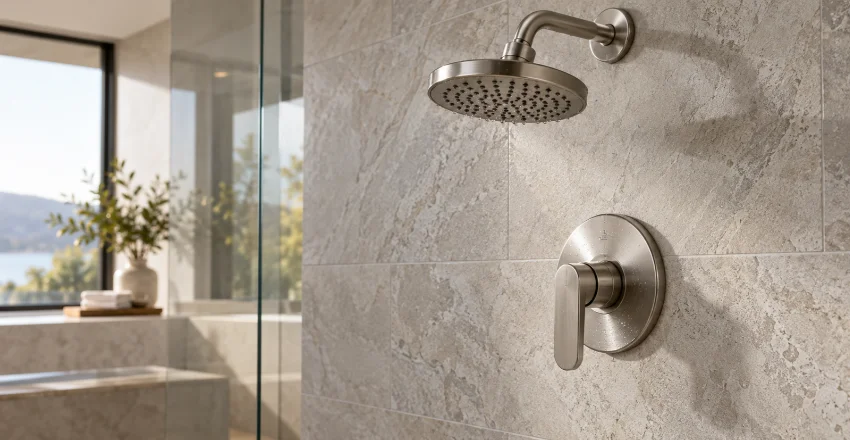
Use this checklist before placing an order:
- Identify whether the project is new construction or a replacement.
- Confirm the existing or planned rough-in valve model.
- Choose pressure-balance or thermostatic temperature control.
- Count every shower and tub outlet in the design.
- Check the showerhead’s rated flow in GPM.
- Verify the trim fits the exact valve platform.
- Confirm the finish works with your cleaning habits.
- Review installation instructions and local plumbing requirements.
Taking these steps before purchase is easier than correcting mismatched hardware later. The most expensive mistake often hides behind the finished wall. A few compatibility checks can protect both the project schedule and your budget.
Our Recommendation for Most U.S. Bathrooms
For a standard single-head shower, a quality pressure-balance system is a practical starting point. It provides temperature protection without adding unnecessary control complexity. Choose a compatible trim kit and an efficient showerhead that suits your household pressure. Consider thermostatic control for a higher-end renovation or multi-outlet system.
Separate temperature and volume adjustment can improve comfort and flexibility. It can also make sense when several family members prefer different flow settings. Avoid choosing by appearance alone. The concealed valve, compatible components, and available water supply determine how well the finished system works. Decorative style should come after those technical decisions.
Frequently Asked Questions
What is the difference between a shower faucet and a shower valve?
A shower faucet usually refers to the complete visible and concealed control system. The valve is the component inside the wall that mixes or regulates water. Handles and trim operate that hidden mechanism.
Is a pressure-balance or thermostatic valve better?
Pressure-balance valves suit many ordinary residential showers and usually cost less. Thermostatic models provide more precise temperature control and often separate volume control. Your outlet count, budget, and desired controls should decide the winner.
Can I replace shower trim without replacing the valve?
Yes, but only when the new trim is compatible with the installed valve platform. Matching the brand alone may not guarantee compatibility. Check the exact valve series before purchasing the trim.
What flow rate should I choose for a showerhead?
Federal rules allow showerheads up to 2.5 GPM in the United States. WaterSense-labeled models use no more than 2.0 GPM and meet performance requirements. Local regulations may set a lower maximum.
Do I need a plumber to replace the system?
Simple showerhead or compatible trim replacement may be manageable for experienced homeowners. Concealed valve replacement usually involves supply plumbing and code considerations. Hiring a licensed plumber reduces risk when walls or pipes must change.
Make the Valve Decision Before the Style Decision
A successful shower upgrade begins behind the wall. Choose the correct control type, verify compatibility, and plan every outlet before selecting decorative trim. Those decisions have a greater effect on performance than finish alone. Then compare flow rate, maintenance needs, and installation requirements. Keep local plumbing rules in the plan, especially during a full remodel. That preparation helps you build a shower that looks good and works predictably for years.