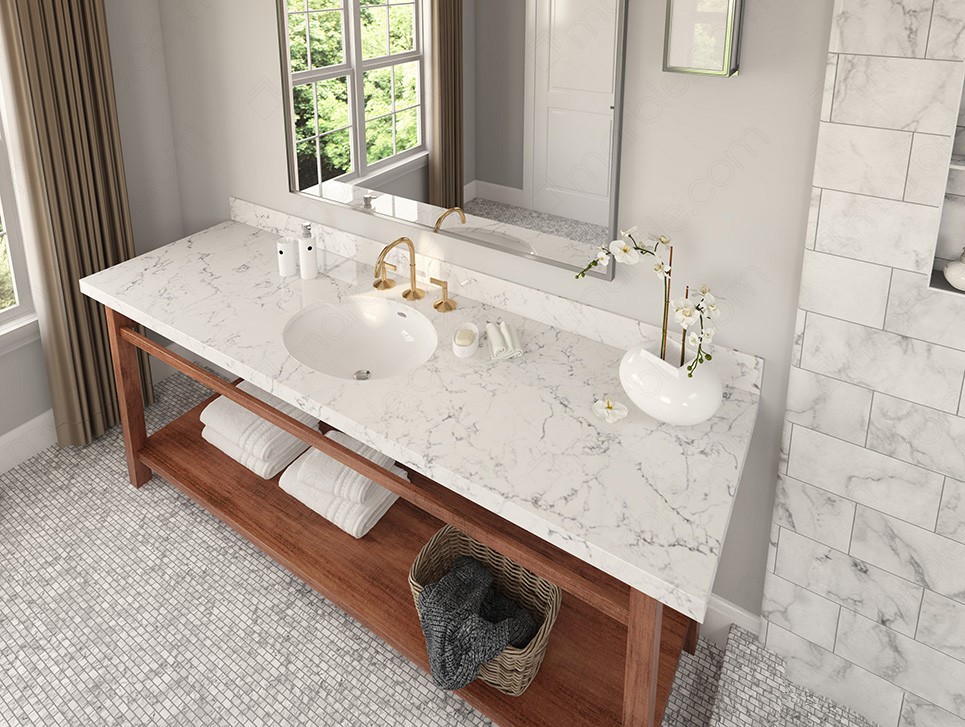
Do you want an innovative quartz vanity to modernize your bathroom? This is a fantastic way to give your restroom more flair and usefulness.
However, there are a lot of solutions available. Knowing where to begin might be difficult.
Allow me to offer some important information regarding these improvements. Finding the ideal fit for your bathroom will be much easier if you do this.
Quartz Countertops for Bathroom Vanities
It is a common choice for countertops in restrooms. It endures for many years because it is strong, elegant, and long-lasting. Additionally, it is easy to clean and resistant to stains. All you have to do is use soap and water to clean the surface.
Because of its durability, style, and low care needs, it’s a great choice. It’s more difficult than it seems to find the ideal thing.
The fact that this comes in a variety of colors is just one of its many additional advantages. Additionally, have finishes that complement the style of your washroom. It comes in a variety of neutral hues, including red, green, brown, black, and white.
It can accommodate your design requirements, whether you’re looking for something loud and lively or elegant and serene.
Select the Proper Color
There are many different color variations available in a bathroom vanity with quartz countertop for your home. This guide will help you choose the perfect hue for the restroom tabletop.
- Think about the color of the flooring and paint.
When selecting the hue of a quartz washroom countertop. The colors that exist in your restroom should be your initial consideration. To achieve balance in your design. You should ideally choose colors that enhance rather than contrast with one another.
Take a look at your washroom’s paint hue. Use a subdued quartz countertop to counterbalance a dramatic design or color. However, a bright-colored one could be the best option if your walls are white or neutral in tone.
- Utilize Examples to Help You Make a Decision
Examine your color choices concerning the current design aspects before making any purchases for your supply. When you go shopping, you might want to bring samples of your cabinets, paint, and flooring. Since you can evaluate it with every other component of your washroom.
If you choose to make this itemthe focal point of the restroom’s design. Just go to a home repair & improvement shop with the sample. Compare it to the paint colors, fixtures, and other items you had in mind. You can select another hue available if it doesn’t match the bathroom you had in mind.
- Select the Proper Texture
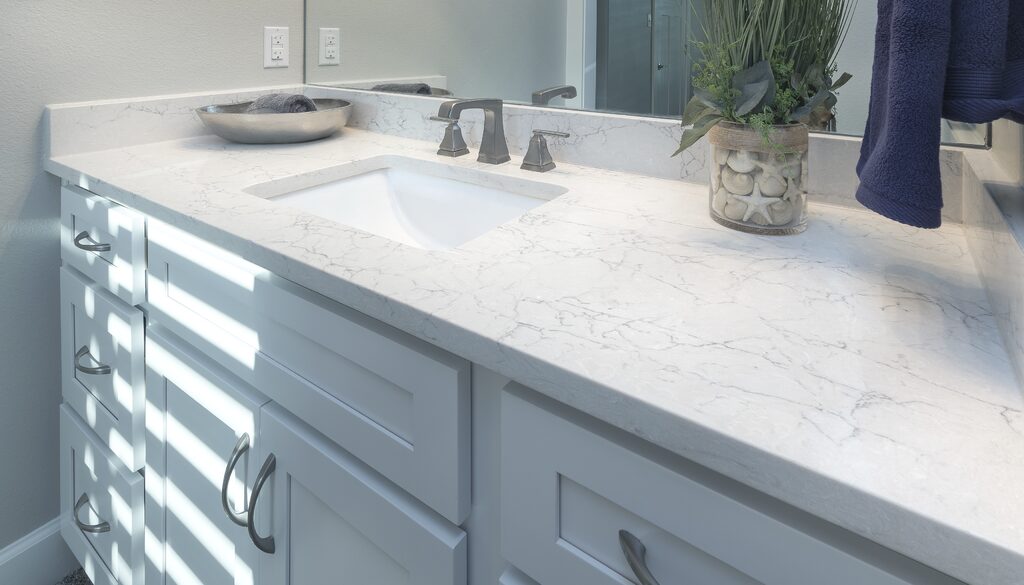
There are three distinct textures: matte, polished, and rough – visit https://blogs.nvcc.edu/mineralogy/minerals/quartz/ to learn more. These days, a lot of firms are also coming up with fresh color schemes. These include surfaces that include veins, flecks, and a granite appearance. Make sure the texture you select complements other bathroom features, such as shower tiles.
Recognize the Variations in Quality
Remodeling a bathroom is costly. But it’s crucial to spend money on high-quality items. Especially when it relates to long-term elements that take up a significant amount of the budget.
Even thoughsomesupply producers employ the same proprietary technique. They may use different formulae and techniques. This could lead to variations in finish, color, and appearance. Some may even be less expensive. Beware of non-through body quartz, though.
This relatively low-cost product only has veining and coloring on top of the surface. The long-lasting quality you need is through-body quartz. This means the veining and coloring will go through the entire slab.
Even though this material is highly durable. It’s not entirely indestructible. Thus, if it gets chipped or scratched over time, it will reveal the same pattern and color underneath. On the other hand, non-through-body quartz will reveal a different color and look quite unappealing.
Take Note of the Thickness
The thickness you require should be taken into consideration while choosing this material for your washroom countertop. There are advantages and disadvantages associated with thick and thin counters.
Even the degree of thickness or thinness has a significant impact on appearance. However, it primarily affects function. The countertop’s weight-bearing capacity is determined by its thickness.
Despite its strength and durability, it is nonetheless brittle. These slabs are typically 1¼ inches thick. For bathroom vanities, this is the typical thickness that is advised. On the other hand, these slabs come in thicknesses of ½, ¾, and 1½ inches.
In addition to being lighter, thinner countertops give your bathroom a sleeker, more contemporary appearance. Although these worktops may be less expensive – more info on cost. They lack the robustness that comes with thicker worktops.
We are aware that your design may be significantly impacted by your budget. However, remember that design is about durability, use, and dependability. Small concessions made today could cause big problems later.
Choose the Edging and Finishing You Require
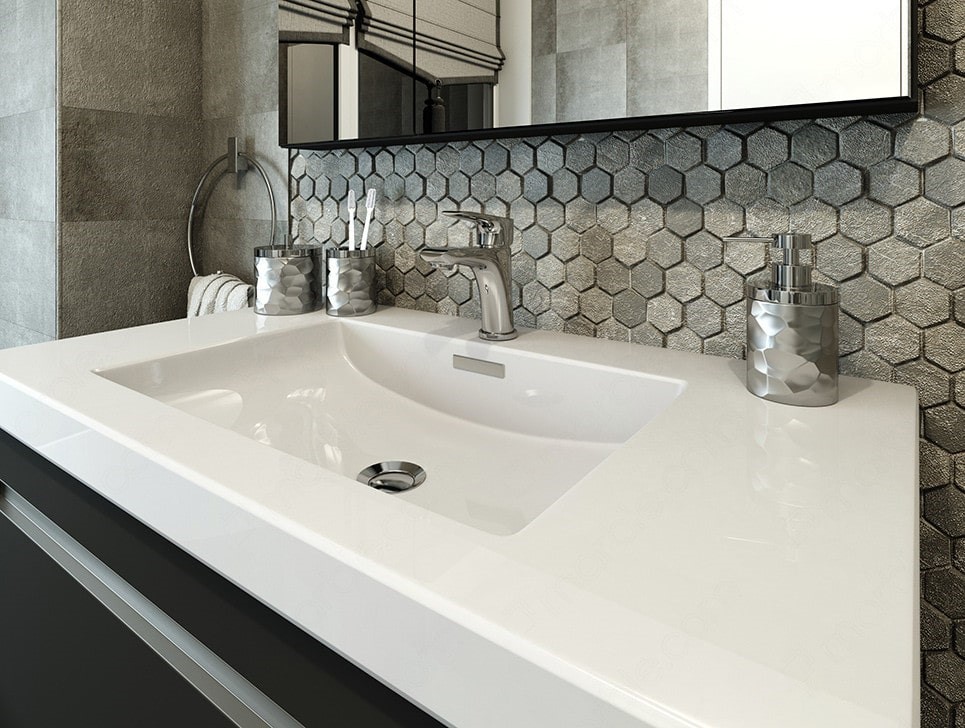
Edging affects a vanity’s or counter’s aesthetic as well as its cost. It typically has a waterfall and straight (squared) edges. You can use these edges on 1¼-inch thick slabs of this type.
Pencil, bullnose (rounded edge), beveled, ogee (curved edge), and “laminated edging” profiles. These add layers of this material to produce a dramatic look. These are examples of more complex edge alternatives.
For instance, a white type with a straight edge can appear sleek and contemporary. With rounded and curved edges, you can offer the same classic and artistic impression.
An elegant and classic home will look great with a polished countertop. Conversely, a surface with a satin coating will look more simple and uncomplicated. Thus, making it more appropriate for a condo or apartment with a modern aesthetic.
Consider Appliances and Fixtures
The manufacturing company will measure the space where the material will be installed before manufacturing. You must choose your sinks and faucets before installation if you intend to surface a restroom. The measurements and the quantity of holes required for installation must be known by the fabricator.
Apart from that, if you want to know about A Guide to Choosing the Right Bathtub for Your Home then please visit our Bathroom Category.