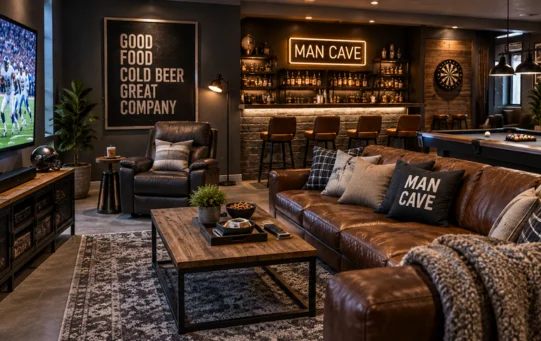
The best man cave ideas start with one primary activity, then build the seating, lighting, storage, and technology around it. Basements, garages, spare bedrooms, bonus rooms, and backyard buildings can all become useful personal retreats when the layout matches how you spend your free time. Instead of filling the room with random signs and oversized furniture, give every feature a reason to be there.
A strong personal retreat starts with one clear purpose: watching sports, gaming, movies, music, hobbies, or relaxed hosting. Choose the room around that purpose, keep the main sightline open, prioritize comfortable seating and layered lighting, then add storage, sound control, and personal decor only where they improve how the space works.
| Man Cave Ideas | Works Well For | Main Advantage | Plan Around |
|---|---|---|---|
| Basement | Movies, games, sports, entertaining | Separation from main living areas | Moisture, ventilation, lighting |
| Garage | Sports, workshops, hobbies, casual hosting | Flexible open floor area | Climate control and vehicle separation |
| Spare bedroom | Gaming, reading, music, office use | Easy and affordable conversion | Furniture scale and storage |
| Bonus room | Media, games, multi-use spaces | Existing finished interior | Sound transfer and traffic flow |
| Backyard shed | Hobbies, music, quiet retreat | Privacy from the main house | Power, insulation, weather protection |
Key takeaways
- Pick one main activity before buying furniture or electronics.
- Spend first on comfort, lighting, climate control, and the main activity zone.
- Use walls for storage when floor space is limited.
- Personal pieces create more character than generic themed decorations.
- Plan electrical, plumbing, ventilation, and sound needs before cosmetic upgrades.
How to Choose the Right Man Cave Ideas for Your Space
Start by measuring the room and identifying its natural focal wall, traffic path, outlets, windows, and doors. Decide how many people normally need seats and which activity deserves the most floor space. This prevents expensive purchases that look appealing online but make the finished room harder to use.
Use a simple three-part filter: purpose, space, and frequency. A room used for nightly gaming needs different seating and storage from a basement used for monthly football gatherings. RoomDome’s home-upgrade guide can also help you identify practical improvements worth completing before decorative work begins.
21 Practical Designs Worth Considering
1. Build a Sports-Watching Lounge
Mount the main screen where every seat gets a comfortable view without forcing people to turn sideways. Add a sectional, recliners, or compact club chairs based on how many regular guests you have. Use team colors in artwork and accessories instead of covering every surface with memorabilia.
2. Create a Dedicated Home Theater
Control light first with shades, curtains, or a windowless location, then organize seating around the screen. Soft furnishings, rugs, and upholstered furniture can reduce harsh echoes while making the room more comfortable. Keep snacks and drinks nearby so people aren’t walking in front of the screen during a movie.
3. Design a Clean Gaming Room
Give consoles or a gaming PC enough ventilation and keep cables organized behind the desk or media console. Adjustable task lighting helps you see controls without creating distracting screen reflections. Closed storage keeps controllers, headsets, games, and charging cables from taking over the room.
4. Bring Back the Retro Arcade
A few arcade cabinets, vintage consoles, or tabletop games can create a clear theme without consuming every wall. Darker paint and colorful accent lighting suit the playful atmosphere, but keep walking paths bright enough for safe movement. Display favorite games as focal pieces rather than trying to recreate an entire commercial arcade.
5. Make a Billiards and Games Room
Use the largest game table as the anchor and arrange other furniture around the clearance it needs. Darts, cards, foosball, or shuffleboard can fill narrower sections that won’t accommodate another large table. Wall-mounted storage keeps cues, paddles, cards, and accessories easy to reach.
6. Add a Compact Home Bar
A dry bar can provide storage and counter space without the expense or complexity of adding plumbing. Pair a narrow cabinet with a beverage refrigerator, glassware storage, and focused task lighting. In small rooms, a rolling cart can offer similar function while staying easy to move.
7. Create a Serious Listening Room
Arrange the main chair or sofa around the audio system, rather than treating speakers as an afterthought. Rugs, curtains, books, and upholstered seating can soften excessive reflections in a hard-surfaced room. Store records, CDs, or equipment neatly so the collection becomes part of the visual design.
8. Build a Music Practice Space
Wall-mounted instrument hangers save floor area while turning guitars or other equipment into functional displays. Give amplifiers, stands, cables, and cases permanent storage locations so setup stays quick. Acoustic treatment may help manage reflections, while true sound isolation usually requires more substantial construction.
9. Plan a Golf Practice Room
Measure the complete swing area before purchasing screens, mats, projectors, or simulator equipment. Ceiling height and unobstructed movement matter more than filling the room with decorative extras. Place seating outside the active swing zone so guests can watch without crowding the player.
10. Combine a Workshop and Lounge
A workbench along one wall leaves the center open for seating or project space. Pegboard, cabinets, and wall racks keep tools visible without spreading them across tables. Choose durable finishes that can handle dust, spills, and frequent movement.
11. Mix a Home Office With a Retreat
A desk and comfortable lounge chair can make a spare room useful during both working hours and off-hours. Separate the zones visually with lighting, a rug, or different wall treatments rather than adding a physical divider. Closed office storage helps the room stop feeling like a workplace once the laptop is put away.
12. Display a Collection Properly
Books, sports pieces, models, records, artwork, and other collections deserve organized display space, not crowded shelves. Use man cave decor selectively so meaningful objects remain the focus. The RoomDome decoration section offers more ideas for treating accessories as part of a larger room design.
13. Create a Library and Reading Den
Pair one supportive chair with a reading lamp, side table, and reachable book storage. Warm wood, darker wall colors, and a textured rug can make the room feel enclosed without making it cluttered. Leave enough empty shelf and wall space for the collection to grow.
14. Set Up a Fitness and Recovery Zone
Choose equipment based on the workouts you perform instead of filling the room with machines you rarely use. Keep the center open for stretching, mobility work, or adjustable benches. Good airflow, bright task lighting, and washable surfaces matter more here than decorative themes.
15. Try a Rustic Lodge Look
Wood tones, leather or leather-look seating, textured fabrics, and warm lighting create a relaxed cabin-inspired room. Limit the material palette so the space feels designed, not assembled from unrelated rustic pieces. One stone, brick, or wood feature wall can provide enough character on its own.
16. Go Modern and Minimal
Choose low-profile furniture, hide cables, and keep a limited color palette for a cleaner look. Built-in or floating storage keeps more of the floor visible and can make a modest room feel less crowded. Add personality through one large artwork, collection, or statement chair.
17. Convert the Garage Carefully
A garage man cave can provide generous floor space for sports, games, hobbies, or a workshop-style setup. Insulation, heating or cooling, lighting, and safe separation from vehicle use should come before expensive furniture. Browse RoomDome’s garage section for related home and garage planning topics.
18. Use a Basement for Multiple Zones
A basement man cave can support separate areas for watching, games, conversation, and storage when square footage allows. Place the loudest activities away from stairs and rooms where noise will be disruptive. RoomDome’s basement resources can help with broader basement planning and maintenance concerns.
19. Make a Small Spare Room Work Harder
Wall-mount the television, shelves, and speakers where practical so furniture doesn’t take up unnecessary floor space. Choose one sofa, loveseat, or pair of chairs rather than forcing a full living-room set into the space. A storage ottoman can handle blankets, controllers, games, and occasional extra seating. Elsewhere on the site: A Practical Marketing Plan for Local Builders and Renovation Firms.
20. Turn a Backyard Shed Into a Hobby Retreat
A detached structure can provide useful separation for woodworking, music, reading, or relaxed downtime. Address weather protection, insulation, electrical service, and local requirements before buying interior finishes. Keep the layout simple, because small detached rooms can feel cramped quickly.
21. Build a Flexible Multi-Zone Room
Use movable tables, modular seating, and storage that can support more than one activity. A television wall can serve movies and gaming, while a compact table can handle cards, hobbies, or snacks. Flexible furniture also makes the room easier to adapt as interests change.
Set Your Budget by Priority, Not by Shopping List
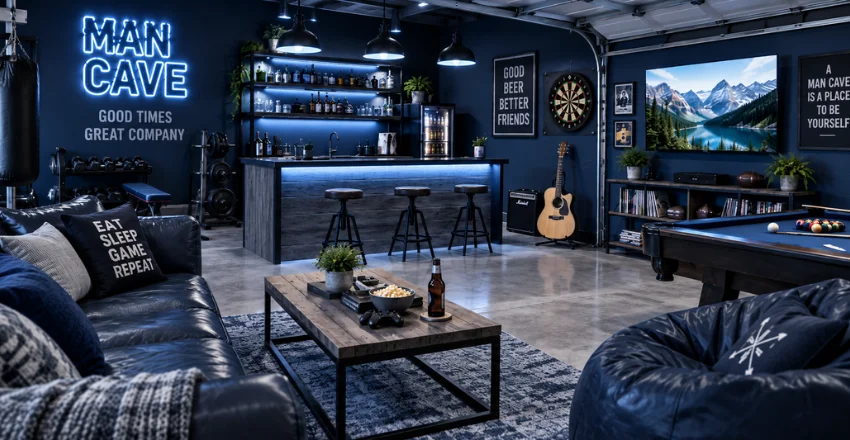
Costs vary widely because refreshing an existing bedroom is different from finishing a basement or adding plumbing and HVAC. Current design guides commonly place simple existing-room setups in the hundreds to low thousands, while construction-heavy conversions can climb far higher. Decide what will change the experience most before spending money on decorative extras.
A practical spending order is
- Fix moisture, temperature, electrical, or structural problems.
- Buy seating suited to the primary activity.
- Set up the main screen, desk, table, or hobby equipment.
- Improve ambient, task, and accent lighting.
- Add organized storage.
- Finish with artwork, collectibles, signs, rugs, and smaller accessories.
Use Lighting and Sound to Make the Room Comfortable
One bright ceiling fixture rarely provides enough flexibility for movies, games, hobbies, and conversation. Combine general illumination with lamps, under-shelf lighting, or other focused sources, then use accent lighting to highlight displays. RoomDome’s guide to small home upgrades also discusses lighting changes as a practical way to alter a room’s feel.
Sound planning starts with the surfaces already in the room. Rugs, curtains, upholstered seating, bookshelves, and acoustic panels can reduce echo, while keeping sound from traveling through walls requires a different level of construction. Plan speaker positions and cable routes early so cords don’t become permanent visual clutter.
Don’t Ignore Garage and Basement Safety
If the retreat is in an attached garage, keep vehicle exhaust completely out of the occupied area and follow current carbon-monoxide guidance. The EPA advises placing a CO alarm inside the home near the door leading to an attached garage and warns against idling a vehicle inside a garage, even with the door open. Permanent electrical, plumbing, ventilation, or HVAC changes may also need qualified trades and approval under local city or county rules.
Basement moisture deserves attention before you add carpet, electronics, furniture, or finished wall treatments. The EPA recommends using basements as living areas only when they are leak-proof and adequately ventilated, with dehumidification used when needed. Solving the room itself first protects the upgrades you add later.
Make the Space Fit the Way You Live
Your man cave doesn’t need every traditional feature to feel finished. Pick the activity you care about most, measure the room carefully, and solve comfort, lighting, storage, and practical building issues before decorating. For more room-planning inspiration, explore RoomDome’s interior design section and build the space piece by piece.
Frequently Asked Questions
What should every man cave have?
Every room should have comfortable seating, suitable lighting, organized storage, and a clear feature tied to its main purpose. That feature might be a screen, gaming desk, pool table, record system, workbench, or reading chair. Personal artwork or collections can then make the space feel specific to its owner.
Which man cave ideas work in a small room?
Small spaces work better with one primary purpose and one strong focal wall. Use wall-mounted storage, appropriately scaled seating, and furniture that performs more than one job. Keeping part of the floor open often makes a compact retreat more comfortable than squeezing in another large feature.
How much does a man cave cost?
A cosmetic conversion of an existing room can stay relatively inexpensive when you reuse furniture and focus on paint, lighting, storage, and decor. Costs increase quickly once a project requires new walls, flooring, electrical work, HVAC, plumbing, or custom cabinetry. Set the budget after inspecting the room, not after choosing entertainment equipment.
What colors work well for a personal retreat?
Charcoal, navy, deep green, brown, and other muted tones can create a cozy backdrop, but dark paint isn’t mandatory. Lighter neutrals can make small rooms feel more open and work well with darker furniture or artwork. Your lighting level, room size, and personal collection should guide the palette more than a fixed decorating rule.