
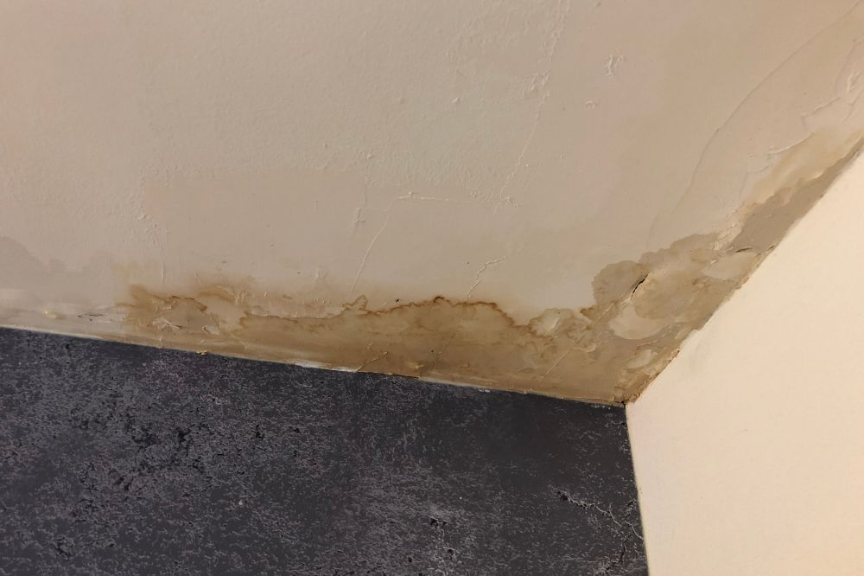
A lot of mold calls start the same way. The homeowner has checked everywhere and swears there is no leak.
Most of the time they are right. There is no leak.
Mold does not need one. It needs damp air and something to settle on, and South Florida hands it both for most of the year.
The number that matters
The U.S. Environmental Protection Agency says to keep indoor humidity under 60 percent, and ideally between 30 and 50 percent.
Above that line, mold can grow on walls, inside closets, and behind furniture with no water event at all.
You can check this yourself. A small humidity meter runs about $10 to $50 at a hardware store, and it tells you more than guessing does.
Cause one: an air conditioner that cools but does not dry
Your AC dries the air by running long enough for water to collect on the cold coil inside and drain away.
When a unit is too big for the house, it cools the rooms fast and shuts off early. The coil never gets the run time it needs.
ENERGY STAR says it plainly. Short run times cut how much water drains off the coil, and some of that moisture evaporates back into the room.
So the house feels cold and sticky at the same time. That combination is the clue.
Cause two: the little drain line nobody thinks about
Your AC pulls water out of the air and sends it outside through a narrow drain line.
In South Florida, that line clogs with slime and dust. When it blocks, water backs up into the pan, then into the ceiling or the wall behind the unit. Elsewhere on the site: Black Mold vs Mildew.
The EPA lists this one in its home guidance: keep the drip pans clean and the drain lines clear and flowing.
It is a five-minute job that prevents a five-figure one.
Cause three, the house nobody is living in
Second homes and rentals sit closed up for months with the thermostat pushed high to save money.
With nobody opening doors and the AC barely running, the air just sits there and stays damp.
People come back in the fall to a musty smell and dark spots on the closet wall. Nothing leaked. The house breathed wet air all summer.
If you leave a place empty, set the system to run on how damp the air is rather than only on how warm the room is.
Cause four: cold surfaces
Warm, damp air touching something cold makes water. You have seen it on a glass of iced tea in July.
The same thing happens on AC vents, on pipes inside walls, and on windows.
The EPA says that if you see water collecting on windows, walls or pipes, dry the surface and find the moisture source quickly.
Five things worth doing this week
- Put a humidity meter in the room that feels worst and watch it for a few days
- Have the AC drain line cleared at your next service visit
- Look under the air handler for water stains or a rusted pan
- Run the bathroom fan during showers and for a while after
- Make sure the clothes dryer vents outside, not into the garage or attic
When it stops being a job for you
Florida licenses the people who test for mold and the people who clean it up. Those are two separate state licenses.
If the spots keep coming back, or they cover more than a small patch, get someone licensed to look. A company doing mold inspection in South Florida can trace where the moisture is coming from instead of just wiping the wall.
Cleaning mold without fixing the water is a short-term win. It comes back, and it comes back in the same spot.
The short version
Most of these homes never leaked. They had damp air and enough time.
Get the air dry, and the mold problem mostly takes care of itself.