
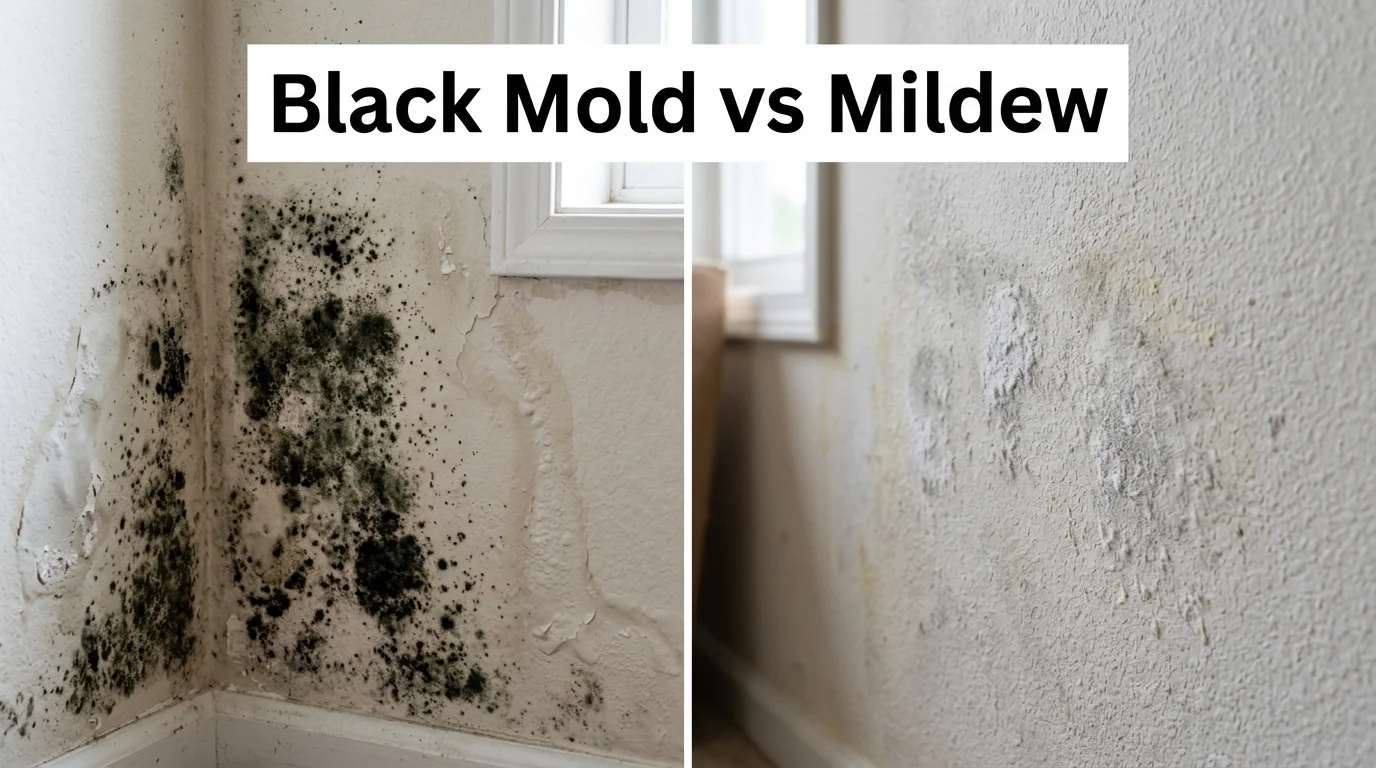
Finding dark growth in a bathroom or basement can make any homeowner nervous. The black mold vs mildew question matters, but color alone cannot identify the fungus. Look instead at moisture, location, surface damage, texture, and the size of the affected area.
Mildew commonly describes flat fungal growth found on damp surfaces. Mold is a broader term covering many fungi with different colors and appearances. Dark growth doesn’t automatically mean Stachybotrys chartarum, often called black mold.
Quick answer: Mildew usually describes thin, surface-level fungal growth, often found in humid areas. Mold may appear fuzzy, slimy, spotted, or discolored and can affect porous materials. You cannot reliably identify a mold species by color alone. Whatever its appearance, visible indoor growth means you should address both the fungus and its moisture source.
Black Mold and Mildew at a Glance
| Feature | Black or Dark Mold | Mildew |
|---|---|---|
| Typical appearance | Dark green, brown, gray, or black | Often white, gray, or light-colored |
| Texture | May appear fuzzy, spotted, or slimy | Often flat or powdery |
| Common locations | Drywall, wood, ceilings, basements | Tile, grout, windows, shower surfaces |
| Main cause | Persistent moisture or water damage | Humidity and damp surfaces |
| Identification | Color cannot confirm species | Usually a descriptive household term |
| Cleanup concern | Depends on size, material, and moisture | Small surface areas may be easier to clean |
| Prevention | Fix leaks and control moisture | Reduce humidity and improve drying |
Key Takeaways
- Both mold and mildew are associated with damp conditions.
- Black color does not prove that growth is Stachybotrys chartarum.
- Remove visible growth regardless of species.
- Finding and fixing the moisture source is essential.
- EPA guidance uses about 10 square feet as an important cleanup threshold.
- People with asthma or weakened immunity should take added precautions.
- Keeping indoor humidity low can reduce conditions that support fungal growth.
What Is Black Mold?
“Black mold” is a household description rather than a reliable identification. Several mold species can look black, dark brown, or green. A visual inspection cannot tell you exactly which species is present.
Stachybotrys chartarum is one mold commonly associated with the term. The CDC describes it as greenish-black and associated with chronically wet cellulose materials. These materials include paper products, fiberboard, and gypsum board.
The practical issue is usually moisture, not the mold’s name. A dark patch near a leak deserves attention even without species identification. EPA guidance recommends cleaning visible growth and correcting the water problem.
What Is Mildew?

Mildew commonly refers to fungal growth that appears flat or powdery. You might notice it on shower surfaces, windows, or other persistently humid locations. It often remains more visible on the surface than deeper moisture damage.
The everyday distinction can help describe what you see. Still, homeowners should not treat the term as a scientific safety classification. Moisture supporting mildew can also create conditions suitable for other molds.
Recurring bathroom growth can signal poor ventilation or consistently high humidity. Cleaning the visible marks without addressing dampness may only provide temporary results. Persistent moisture deserves investigation even when the affected area looks minor.
Black Mold vs Mildew: 7 Differences Worth Checking
1. Color Is Less Useful Than You Might Think
Mildew is often described as white, gray, or light-colored. Mold can appear black, green, brown, white, or other colors. CDC guidance states that color does not indicate whether mold is more or less dangerous.
That makes color a weak diagnostic tool for homeowners. A black patch should not automatically be labeled toxic mold. Likewise, lighter growth should not automatically be dismissed as harmless.
2. Texture Can Provide a Clue
Surface growth called mildew often looks flat or powdery. Other mold growth may appear fuzzy, irregular, spotted, or slimy. These differences can help you describe the problem, but they cannot confirm the species.
Avoid touching suspicious growth merely to test its texture. Disturbing mold can release particles into the surrounding area. First, assess its location, size, moisture source, and the affected material.
3. The Material Underneath Matters
A small patch on hard tile presents a different cleanup problem than damaged drywall. Porous materials can hold moisture and fungal growth below their visible surfaces. EPA guidance says some moldy porous materials may require disposal.
Watch for staining, swelling, softness, peeling paint, or damaged wallboard. Those signs can suggest a longer-lasting moisture problem. Roomdome’s guide to drying out water damage explains why finding and stopping the water source comes first.
4. Location Can Point Toward the Moisture Source
Bathrooms commonly develop fungal growth around showers, grout, windows, and ceilings. Basements may have problems near foundation walls, plumbing, stored cardboard, or previously flooded areas. Kitchens can develop growth beneath sinks or around leaking appliances.
Location can therefore tell you more than color. Check nearby pipes, windows, roof areas, drains, and ventilation. Roomdome also covers humidity-related mold growth in homes.
5. Odor May Reveal Hidden Moisture
Mold can produce a noticeable musty odor. CDC guidance notes that mold may be visible or detectable by its musty smell. A persistent odor without visible growth can justify checking concealed damp areas.
Look around cabinets, plumbing penetrations, flooring edges, and water-damaged walls. Don’t open large wall areas without understanding the problem. Extensive hidden growth may require professional assessment.
6. Recurring Growth Signals an Unresolved Problem
A patch that returns after cleaning often means moisture remains. Common causes include condensation, plumbing leaks, roof leaks, and high indoor humidity. Cleaning alone cannot solve an active water problem.
EPA guidance emphasizes moisture control as the key to controlling indoor mold. Generally, dry wet materials within 24 to 48 hours.
7. Cleanup Depends More on Extent Than Color
The size of the affected area is important when planning cleanup. EPA guidance says areas below roughly 10 square feet can often be handled by homeowners. Larger areas or extensive water damage can warrant professional help.
This guidance applies more reliably than deciding based on color. A tiny dark mark and widespread hidden moisture present different problems. Consider the affected material and water source, along with the visible area.
Can Black Mold or Mildew Affect Your Health?
Exposure to damp or moldy environments can affect people differently. CDC lists possible symptoms, including stuffy nose, coughing, wheezing, eye irritation, and skin rash. People with mold allergies or asthma may experience stronger reactions.
People with weakened immune systems or chronic lung conditions require extra caution. CDC notes that certain immunocompromised people can develop serious fungal infections. Anyone experiencing persistent symptoms should seek guidance from a qualified healthcare professional.
The important point is not to diagnose health risk from color. CDC says all molds should receive similar attention regarding removal and potential health concerns. You generally do not need to identify the exact species before addressing visible indoor growth.
Do You Need a Mold Test?
Routine home testing is often unnecessary when you can already see mold. The CDC does not recommend routine mold testing to determine whether a home is safe. No health-based indoor standards define acceptable quantities for individual mold species.
Testing also does not fix the source of growth. If visible mold exists, removal and moisture correction remain necessary. A professional assessment can still help with complex or hidden moisture problems.
A specialist may also help after major flooding or exposure to contaminated water. The same applies when extensive building materials are affected. Focus first on determining why the area became wet.
How to Clean a Small Mold or Mildew Area
EPA guidance recommends scrubbing mold from hard surfaces using detergent and water. Then dry the cleaned area completely. Porous items may need replacement if you can’t remove the growth thoroughly.
Do not paint or caulk directly over active growth. EPA warns that coatings applied over moldy surfaces can peel. Remove the growth, solve the moisture problem, and let the material dry first.
Personal protection also matters during cleanup. CDC disaster-cleanup guidance recommends at least an N95 respirator, protective gloves, and goggles for mold cleanup. Larger or complicated problems deserve professional attention.
For other household surface-care topics, Roomdome’s cleaning guides provide additional home-maintenance information. Cleaning techniques must match the affected material. Never combine cleaning chemicals unless their labels specifically allow it.
When Should You Call a Professional?
Consider professional help when visible growth covers more than about 10 square feet. You should also consider it after major water damage or contaminated-water exposure. Hidden growth affecting walls, insulation, HVAC components, or multiple rooms can also complicate DIY cleanup.
Health circumstances may also affect that decision. People with asthma, serious allergies, chronic lung disease, or weakened immunity can face greater risks. Discuss individual health concerns with a healthcare professional before attempting significant cleanup.
A remediation contractor should address both contamination and its moisture source. Simply spraying or painting the visible surface may leave the underlying problem intact. Ask prospective contractors about their experience and remediation procedures.
How to Prevent Mold and Mildew From Returning
Moisture control offers the strongest long-term prevention. EPA recommends keeping indoor relative humidity below 60 percent, ideally between 30 and 50 percent. CDC advises keeping household humidity no higher than 50 percent when possible.
Use bathroom exhaust fans and promptly repair plumbing or roof leaks. Dry wet materials within 24 to 48 hours whenever possible. Watch for condensation on windows, pipes, exterior walls, and other cool surfaces.
A basic humidity meter can help identify rooms that stay damp. Basements, bathrooms, laundry rooms, and poorly ventilated areas deserve particular attention. Preventing excess moisture is easier than repeatedly cleaning fungal growth.
FAQ About Black Mold vs Mildew
What is the biggest difference between black mold vs mildew?
Mildew commonly describes flat, surface-level fungal growth, while mold is the broader category. Dark mold may also affect porous materials after persistent moisture exposure. Appearance alone cannot determine the species or health risk.
Is every black-colored mold toxic black mold?
No. Many molds can appear dark, and color cannot identify a species. CDC states that mold color does not reliably indicate how dangerous it is.
Does mildew turn into black mold?
It is better to think about the underlying moisture conditions. Mildew and mold are fungal growth associated with damp environments. Persistent moisture can support continued or additional fungal growth.
Can I identify Stachybotrys by looking at it?
No reliable visual check can confirm that identification. Stachybotrys chartarum can appear greenish-black, but other molds can look similar. CDC says determining the mold type is generally unnecessary for deciding whether to remove it.
Is bleach required to remove household mold?
EPA’s basic cleanup guidance recommends detergent and water for mold on hard surfaces. Dry the surface thoroughly afterward. You must also correct the moisture source to prevent recurring growth.
How much mold can I clean myself?
EPA says homeowners can often handle areas smaller than about 10 square feet. Extensive water damage and larger areas may require professional remediation. Your health, the affected material, and the water source also matter.
The Bottom Line
Do not rely on color when deciding how serious household fungal growth might be. Check its extent, affected material, moisture source, and whether the problem keeps returning. Those factors provide more useful information for choosing your next step.
Small surface problems may be manageable with careful cleaning and complete drying. Larger areas, damaged porous materials, or extensive water intrusion can require professional help. Whatever you find, correcting moisture is the most important step toward preventing another outbreak.