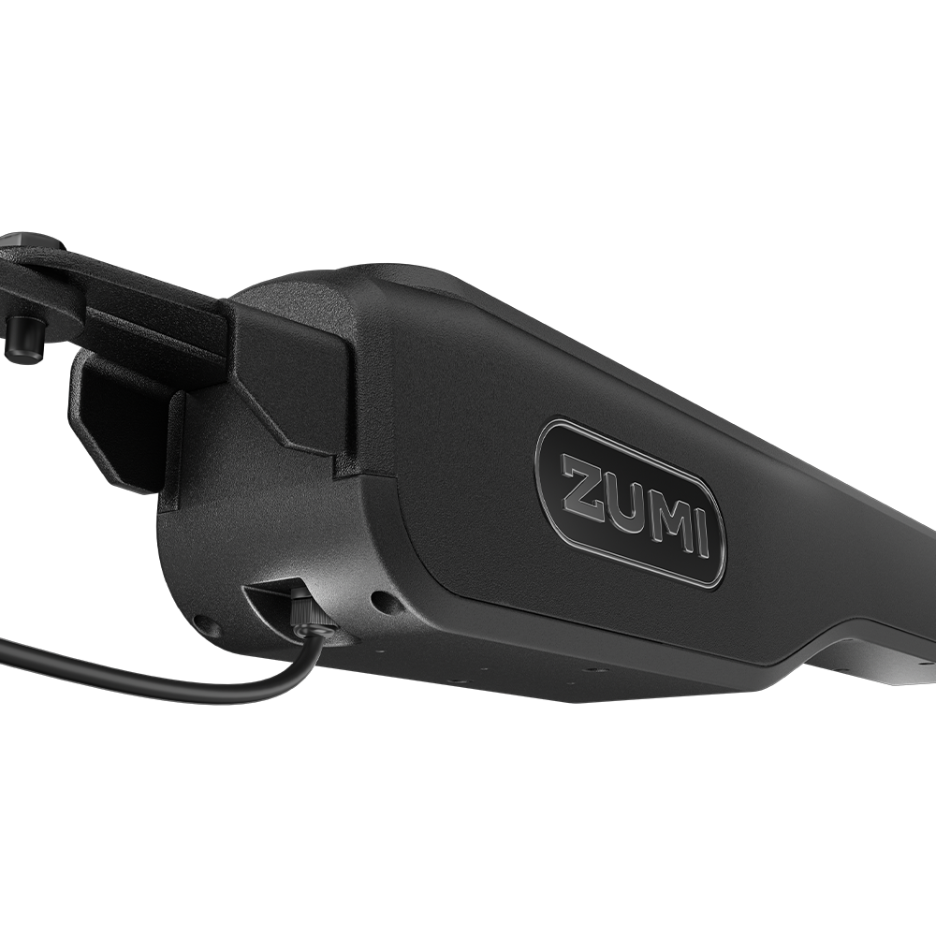
When you press the button on your remote and watch your heavy driveway gate swing open, you’re witnessing a marvel of linear engineering. At the heart of that movement is the actuator’s arm.
If the gate is the “door,” the actuator arm is the “muscle.” But how exactly does a metal bar turn electricity into enough force to move a 1,000-pound gate? As experts in smart gate automation at Zumi, we’re breaking down everything you need to know about these essential components.
What Exactly is an Actuator Arm?
In the simplest terms, an actuator arm is a mechanical device that converts energy (usually 12V or 24V DC power) into linear motion.
While industrial actuators can be hydraulic or pneumatic, residential gate openers like the Zumi W1 or W2 series almost exclusively use electromechanical screw-driven actuators.
How It Works: The “Lead Screw” Magic
Inside the protective weather-resistant housing of the arm, there is a long-threaded rod called a lead screw.
- The Motor: When you trigger the gate, a small but powerful electric motor at the base of the arm begins to spin.
- The Rotation: This motor rotates the lead screw.
- The Extension: A nut attached to the inner tube of the arm travels along the threads of the spinning screw. As the nut moves forward, the inner tube extends, pushing the gate open. When the motor spins in reverse, the tube retracts, pulling the gate closed.
Key Components of a Quality Actuator
Not all arms are built the same. If you are looking for longevity, these are the “must-haves” inside the casing:
- Motor: High-quality arms use all copper motors. Copper handles heat better than cheaper alloys, which is vital during mid-summer heatwaves.
- Gearing: Look for reinforced nylon or metal gears. Nylon is preferred for residential areas because it’s incredibly quiet, while metal gears are reserved for high-traffic industrial use.
- The Housing: Since the arm lives outside 365 days a year, it needs an IP55 or higher weather rating to keep out dust, rain, and insects.
The Limit Switches: These tell the arm exactly when to stop. Modern Zumi arms use digital limits, which are more precise than old-fashioned mechanical “clickers” that can be worn out over time.

Why Choose Actuator Arms Over Other Openers?
If you have a swing gate, you usually choose between an actuator arm or an “underground” opener. Here’s why the arm usually wins:
- Ease of Maintenance: Everything is above ground. If you need to lubricate the pivot points or check the wiring, it’s right there in front of you.
- Leverage: Because the arm is mounted further out on the gate wing, it has better mechanical advantage (leverage), making it more efficient at handling wind resistance.
- Cost: Actuator arms are significantly more affordable and easier to install than underground systems, which require extensive excavation.
Pro-Tip: The “Geometry” of the Arm
The most common mistake in DIY installation isn’t the wiring—it’s the mounting geometry. If the arm is mounted at the wrong angle, it will struggle to “push” the gate, leading to premature motor wear.
Always follow the manufacturer’s “A and B” measurements strictly. This ensures the arm has the perfect amount of travel to lock the gate securely in the closed position without straining the brackets.
Is Your Gate Ready for an Upgrade?
Whether you’re replacing an old, noisy opener or automating a brand-new entrance, understanding the “muscle” helps you make the right choice for your home’s security and curb appeal.
Would you like me to provide a mounting guide or a chart showing which Zumi actuator arm is best for your specific gate length and weight?