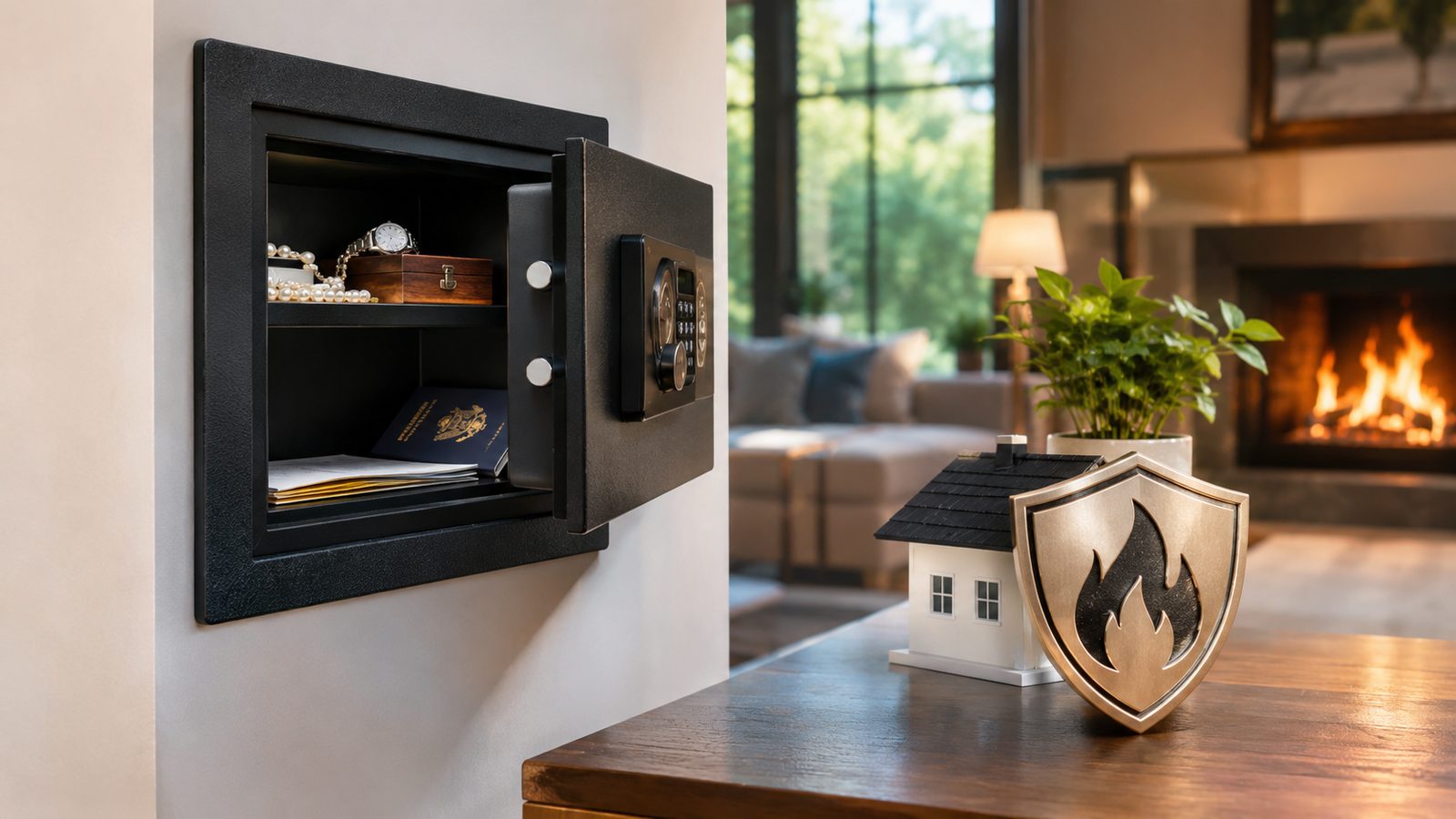
A fireproof wall safe can protect important documents while keeping valuables hidden and off the floor. Yet many recessed safes provide concealment without meaningful fire resistance. U.S. homeowners should check the fire rating, wall depth, construction, lock, and installation requirements before buying. Direct answer: A good fire-resistant wall safe needs a credible tested rating, secure anchoring, and enough depth for insulation. Many shallow models fit standard walls but lack verified fire protection. Serious fire-rated models often require a deeper framed cavity, closet wall, or custom enclosure because their insulated bodies can exceed 12 inches deep.
Fire-Resistant Wall Safe Facts at a Glance
| Buying factor | What to look for | Why it matters |
|---|---|---|
| Fire rating | Independent test information with time and temperature | Marketing claims alone do not show actual performance |
| Interior temperature | A rating designed to protect paper documents | External heat matters less than conditions inside |
| Wall depth | Measure the clear cavity before ordering | Fire insulation makes many rated models unusually deep |
| Stud spacing | Check the safe body and flange dimensions | Many models target common 16-inch-on-center framing |
| Weight | Confirm structural support requirements | Some insulated models weigh 75 pounds or more |
| Lock | Electronic, mechanical, or key-supported access | The best choice depends on access and maintenance preferences |
| Anchoring | Follow the manufacturer’s mounting design | Poor mounting can weaken theft protection |
| Water protection | Confirm separately from the fire rating | Fire resistance does not automatically mean flood protection |
Key Takeaways
* A shallow hidden safe and a tested fire-resistant safe are not always the same product. * Standard 2×4 framing usually offers about 3.5 inches of cavity depth. * Serious fire-rated in-wall models can require roughly 12 to 15 inches of depth. * A recognized testing label is more useful than vague words such as “fire resistant.” * Measure the wall, utilities, framing, and available support before cutting drywall. * Choose storage around the valuables you cannot easily replace.
Why “Fireproof” Needs a Closer Look
No household safe can resist unlimited heat for unlimited time. The useful question is how the product performed during a defined fire test. Ratings normally state a duration, test temperature, and maximum permitted interior temperature. American Security states its WFS149E5LP has a UL 60-minute rating at 1,700°F. The manufacturer lists an exterior depth of 15.375 inches and a weight of 104 pounds. Those figures show why rated protection can demand more space than a normal interior wall provides. Gardall offers another example of the same tradeoff. Its WMS911-G-E is listed with a one-hour KIS rating and a 12.5-inch exterior depth. The unit weighs about 75 pounds, so installation planning matters before drywall is opened.
How to Choose a Fireproof Wall Safe
Start with evidence instead of appearance or keypad features. A polished door does not tell you how the insulated body performs during a fire. Search the manufacturer’s specifications for the testing organization, rating duration, and tested temperatures. Next, decide what you need to protect. Passports, deeds, certificates, insurance papers, and estate documents have different storage needs than jewelry. Digital media may also require different temperature limits from ordinary paper. Finally, compare the installation requirements with your actual home. A safe that cannot fit securely in your chosen wall is the wrong purchase. Measurements should come before brand comparisons or feature shopping.
Compare the Main Protection Options
| Option | Fire protection | Installation | Concealment | Best use |
|---|---|---|---|---|
| Tested fire-rated in-wall safe | Strong when independently rated | Often needs a deep framed cavity | Excellent | Documents plus small valuables |
| Shallow standard wall model | Often little or none | Usually easier in standard framing | Excellent | Concealed theft deterrence |
| Freestanding fire safe | Many tested choices available | Floor placement and anchoring | Low | Fire protection when wall depth is limited |
| Fire chest or document box | Usually focused on papers | No wall construction needed | Low | Important records and backup storage |
A tested in-wall model is the strongest choice when you need both concealment and documented fire resistance. A shallow recessed model makes more sense when hiding valuables is the main goal. Homeowners with standard shallow walls may get better fire protection from a rated freestanding unit. That distinction is easy to miss during online shopping. Recent wall-safe comparisons also warn that many common between-stud products have no independent fire rating. Fire-rated models are usually deeper because insulation requires physical space.
Measure Your Wall Before You Buy
Most U.S. interior walls framed with 2×4 lumber provide about 3.5 inches of cavity depth. Standard 16-inch-on-center framing leaves roughly 14.5 inches between studs. Plumbing, electrical wiring, blocking, or unusual framing can reduce the usable space further. Never assume a product labeled “between the studs” fits your wall. Some fire-resistant units fit the width between studs but extend far behind them. You may need a closet, framed bump-out, thicker wall, or purpose-built enclosure. RoomDome’s basement remodeling guide also emphasizes checking utilities and structural conditions before finishing walls. That same approach applies when cutting an opening for secure storage. Confirm wiring, pipes, framing, and local requirements before making permanent changes.
Check the Rating Before Trusting the Label
A credible rating should tell you more than the word “fireproof.” Look for the test duration and the temperature used during testing. You should also check whether the rating comes from an independent organization or only the seller. For example, AMSEC publishes a UL 60-minute rating at 1,700°F for its WFS149E5LP. Gardall lists a one-hour KIS rating for its WMS911-G-E. These disclosures give shoppers something specific to compare. Be cautious when a listing gives only an unsupported temperature or vague protection claim. A fire-resistant document bag inside an unrated steel box does not rate the box itself. Read the certification details for the complete product you intend to install.
Think About Theft Protection Separately
Fire resistance and burglary resistance measure different problems. Insulation can protect contents from heat without making a door highly resistant to tools. Likewise, thick steel can resist prying while offering little protection against sustained fire. Look at door construction, locking bolts, anchoring points, and exposed pry gaps. Concealment can also reduce the chance that an intruder finds the unit. RoomDome’s guide to strengthening a sliding door explains the value of layered home security rather than relying on one barrier. The same principle works indoors. Strong entry points, alarms, lighting, secure storage, and sensible concealment support each other. A recessed safe should be one component of that broader plan.
Pick the Right Lock for Daily Use
Electronic locks offer quick access and easy code changes. They also depend on batteries and electronic components. Check the manufacturer’s emergency-power or service procedure before choosing a keypad model. Mechanical combination locks avoid batteries but require more deliberate operation. Key locks can be straightforward, although the key then becomes another item requiring secure storage. Choose the system you can maintain correctly for years. Avoid buying based on biometrics alone. Fast access is useful, but the safe’s body, door, rating, and mounting remain more important. A feature-rich lock cannot compensate for weak construction.
Plan Concealment Without Blocking Access
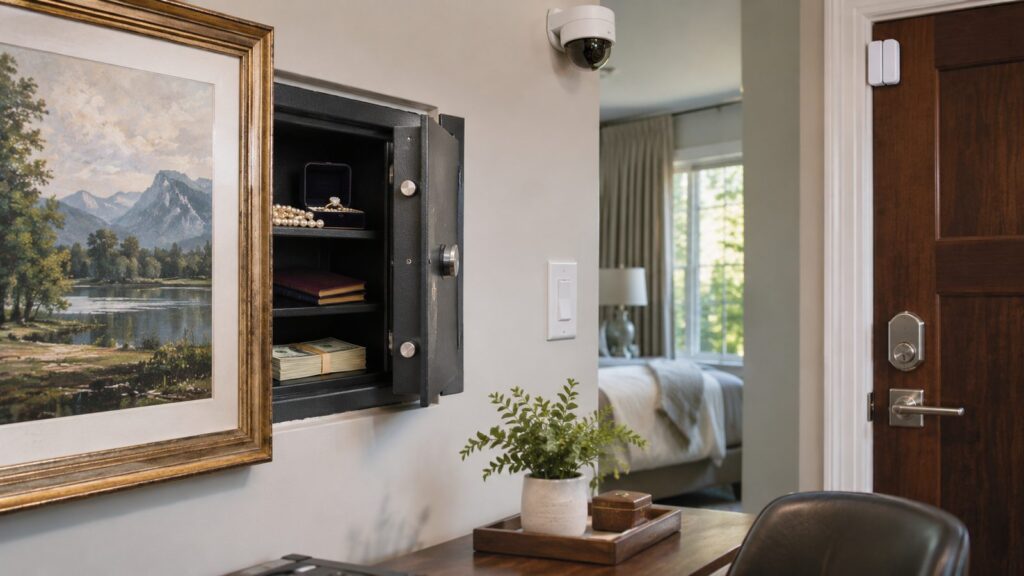
A recessed installation can sit behind artwork, a mirror, shelving, or another decorative feature. The covering should move easily without damaging the lock or restricting the door. You also need enough clearance to remove stored items comfortably. RoomDome’s accent wall design guide can help you integrate a concealed location naturally. The goal is to avoid creating an obvious or awkward patch in the room. Concealment works better when the surrounding design looks intentional. Do not sacrifice installation quality for a perfect hiding place. An unsuitable wall may contain plumbing, wiring, or structural complications. Choose a safer location instead of forcing the project into a risky cavity.
Decide What Should Go Inside
Store documents and compact valuables that fit comfortably without crowding the door mechanism. Common choices include passports, certificates, property records, insurance documents, jewelry, and small heirlooms. Keep an inventory so you know what would need replacement after an emergency. Do not assume the unit protects against water unless the manufacturer says so. Firefighting can expose a home to large amounts of water after flames are controlled. Water resistance should therefore be checked as a separate specification. You can also keep encrypted digital copies of critical records elsewhere. Physical and digital backups solve different problems. Using both reduces dependence on a single storage location.
When Professional Installation Makes Sense
Professional help becomes more valuable as the safe gets deeper and heavier. A 75-pound or 104-pound insulated unit needs reliable support. Cutting near utilities or modifying framing also raises the stakes. A qualified installer can confirm the cavity dimensions and design suitable support. They can also identify complications before a large section of drywall gets removed. Structural work may require additional expertise depending on the location. RoomDome’s home systems maintenance guide highlights the risks associated with hidden electrical problems. Check for utilities before any wall cutting begins. Avoid guessing when wiring or plumbing locations are uncertain.
Recommendation: Prioritize Verified Protection Over a Thin Profile
For homeowners focused on paper documents, choose a model with clear independent fire-test information. The AMSEC WFS149E5LP is a useful benchmark because AMSEC publishes its UL rating and dimensions. Its substantial depth also shows the installation compromises involved. Choose a shallow standard model instead when concealment is your main priority. Pairing it with separate rated document storage may be more practical in a standard wall. This approach can avoid major framing changes while separating theft and fire protection. The right choice depends on your wall and the risks you want to address. Measure first, verify the rating second, and compare security construction third. That order prevents many expensive buying mistakes.
Frequently Asked Questions
Is a fireproof wall safe really fireproof?
A fireproof wall safe should be treated as fire resistant for a stated period, not permanently immune to fire. Look for a defined time and temperature rating. Independent testing gives you stronger evidence than a general marketing claim.
Can a fire-rated safe fit inside a standard 2×4 wall?
Many serious fire-rated models cannot fit completely inside a standard 2×4 cavity. Their insulated bodies can be 12 inches deep or more. Check the complete exterior depth before ordering.
What should I store in an in-wall safe?
Important papers, passports, jewelry, certificates, and compact valuables are common choices. Avoid overfilling the interior or obstructing the lock. Keep backups of irreplaceable records in another secure location.
Is a wall-mounted safe better than a floor safe?
Neither design is automatically better for every homeowner. Recessed storage offers concealment and saves floor space. Freestanding models often provide more choices for certified fire protection and larger capacities.
Do fire ratings include water protection?
No. Fire and water protection are separate performance claims. Confirm both specifications when flooding or firefighting water is a concern.
Before Cutting the Wall
Write down your wall depth, stud spacing, safe dimensions, weight, rating, and mounting method before purchasing. Check for wiring and plumbing at the planned location. Then compare those facts with the manufacturer’s installation instructions. A properly chosen recessed safe can provide discreet storage without occupying floor space. The best purchase is not the model with the longest feature list. It is the one whose tested protection and installation needs match your home. For more U.S. homeowner planning advice, explore RoomDome’s home improvement resources before starting wall modifications. Good preparation protects both your valuables and your house. Measure twice, verify the rating, and install the unit correctly. —