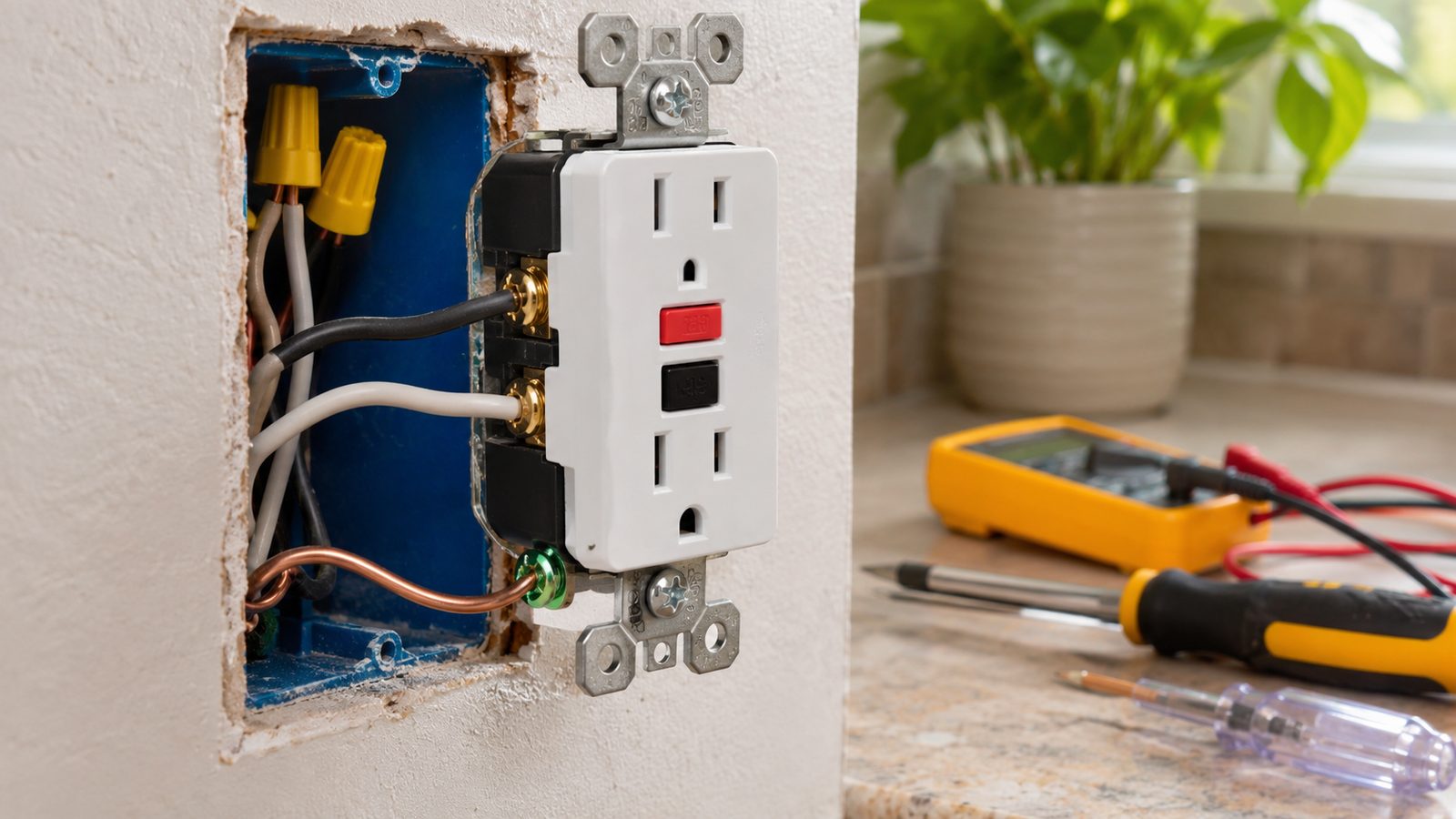
GFCI outlet wiring matters because one reversed connection can defeat the protection you expected. A GFCI receptacle monitors current and disconnects power when it detects dangerous leakage. For U.S. homes, safe work also depends on local code and the device instructions. GFCI receptacle wiring starts with one rule: incoming power connects to LINE, not LOAD. LOAD terminals are optional and protect downstream receptacles when correctly used. Shut off the breaker and verify the box is de-energized. Stop if the circuit layout is unclear.
GFCI Wiring at a Glance
| Connection | Typical conductor | Terminal | Purpose |
|---|---|---|---|
| LINE hot | Black | Brass LINE | Brings power from the panel |
| LINE neutral | White | Silver LINE | Returns current to the panel |
| Equipment ground | Bare or green | Green screw | Bonds grounding paths |
| LOAD hot | Black | Brass LOAD | Feeds protected downstream receptacles |
| LOAD neutral | White | Silver LOAD | Completes the protected downstream circuit |
A standard replacement often uses only the LINE terminals. LOAD is used only when another cable feeds receptacles needing downstream protection. Leviton identifies line-load reversal as a common installation problem that can disable normal operation.
Key Takeaways
- LINE receives incoming power from the electrical panel.
- LOAD sends protected power to downstream receptacles.
- Ground connects to the green grounding terminal when present.
- The breaker must be off before conductors are handled.
- Built-in TEST and RESET buttons must work after installation.
- Local electrical rules can differ from the national model code.
What You Need Before Touching the Receptacle
Start with the device instructions, a non-contact voltage tester, and the correct replacement receptacle. You may also need screwdrivers, wire strippers, approved connectors, and a receptacle tester. Use only tools and devices listed for the wiring method involved. Check the circuit rating before buying the replacement. The receptacle, conductors, box, and branch circuit must work together correctly. Older aluminum wiring, damaged insulation, shared neutrals, or crowded boxes require professional evaluation. RoomDome’s home systems maintenance guide encourages regular checks for damaged outlets, breakers, and wiring. Those warning signs matter before any receptacle replacement begins. Scorching, heat, buzzing, or repeated tripping should send you to a licensed electrician.
GFCI Outlet Wiring: 7 Steps for a Safer Installation
- Turn off the correct breaker. Switch off the branch circuit at the service panel. Verify the receptacle has lost power before removing the cover.
- Prove the box is de-energized. Test the conductors with a non-contact voltage tester or a multimeter. Never assume a label or breaker position proves the wiring is dead.
- Document the existing wiring. Photograph the old receptacle before disconnecting conductors. Mark cables if more than one enters the box.
- Identify the LINE conductors. LINE is the cable bringing power from the panel. If that role is uncertain, stop and call an electrician.
- Connect LINE correctly. The hot conductor normally goes to the brass LINE terminal. The neutral normally goes to the silver LINE terminal.
- Use LOAD only when needed. Connect downstream conductors to LOAD only when those receptacles need protection. Keep LOAD covered or unused otherwise.
- Restore power and test protection. Mount the device, restore power, and press TEST. RESET should restore power after the device trips correctly.
The exact terminal layout varies by manufacturer and model. Always follow the diagram packaged with the receptacle. CPSC advises contacting a qualified electrician whenever the proper procedure is uncertain.
LINE vs. LOAD: The Difference That Prevents Most Mistakes
The LINE terminals accept the incoming branch-circuit conductors. The LOAD terminals feed other receptacles through the protective electronics. Mixing those roles can leave the device unable to reset or protect correctly. Modern products may include reverse-wiring safeguards. Leviton states that some products block power when LINE and LOAD are reversed. That feature helps, but it does not replace correct identification and testing. If only one cable enters a simple replacement box, that cable is commonly the incoming feed. Boxes with multiple cables can be harder to interpret. Switched circuits, shared neutrals, or multiwire branch circuits need extra care.
Grounding, Older Two-Wire Circuits, and Labels
A GFCI detects an imbalance between current leaving and returning on the circuit. Its protective function does not depend on an equipment grounding conductor. That does not mean grounding requirements can be ignored. Older two-wire systems can sometimes use GFCI protection as a replacement method. The replacement must follow the applicable code and required labeling rules. A qualified electrician can confirm whether the existing circuit qualifies. RoomDome’s electrical inspection article explains why aging wiring deserves careful review. That is especially relevant before modifying older receptacle boxes. A small outlet project can reveal larger system problems.
Where U.S. Homes Commonly Need GFCI Protection
GFCI protection is widely required where electricity and moisture can meet. ESFI lists bathrooms, garages, kitchens, basements, crawlspaces, laundry areas, and outdoor receptacles. It also lists several sink, damp, and wet locations. NFPA identifies the 2026 National Electrical Code as the current edition. Local jurisdictions can adopt editions and amendments on different schedules. Check your local authority before treating any national summary as binding. Basement projects often combine outlets, lighting, pumps, and moisture concerns. RoomDome’s basement remodel guide recommends planning electrical locations early. Its sump pump installation cost guide also discusses electrical work that can affect project costs.

Testing the Receptacle After Installation
Testing confirms that the protective mechanism operates after the work is complete. Press RESET, plug in a small lamp, then press TEST. The connected device should lose power when the protection trips. Press RESET again to restore power. If TEST does not interrupt power, do not keep using the receptacle. ESFI recommends replacement when test or reset functions fail. Test protected receptacles regularly after installation. ESFI recommends monthly testing for GFCI devices. Frequent testing can uncover a failed device that still looks normal.
Common Wiring Mistakes to Avoid
- Connecting the incoming feed to LOAD instead of LINE.
- Using LOAD when no downstream protection is intended.
- Failing to verify power is off before handling conductors.
- Mixing neutrals from different circuits.
- Ignoring damaged insulation, loose conductors, or overheated terminals.
- Assuming protective circuitry fixes every grounding or wiring defect.
- Skipping the TEST and RESET check after installation.
These mistakes can create shock, fire, or nuisance-tripping risks. Some errors also leave downstream receptacles without expected protection. Careful labeling reduces uncertainty, but it cannot correct an unknown circuit design.
When to Call a Licensed Electrician
Call a professional when the box contains aluminum wiring, unknown cables, shared neutrals, or damaged conductors. Also stop if the breaker trips repeatedly or the device will not reset. Those symptoms can point to problems beyond the receptacle. Professional help also makes sense for new circuits, panel work, or code questions. Many jurisdictions require a permit or inspection for electrical work, so confirm local rules before starting. ESFI recommends qualified electricians for installed GFCI devices. RoomDome’s new homeowner services guide also treats electrical systems as safety-critical home services.
Frequently Asked Questions
What is the safest approach to GFCI outlet wiring?
Turn off the breaker and verify the conductors are de-energized. Identify LINE before making connections and follow the manufacturer’s diagram exactly. Hire a licensed electrician when the circuit cannot be identified confidently.
Can LINE and LOAD be reversed?
They can be connected incorrectly, but the device may not operate as intended. Many newer products include safeguards against this mistake. Correct the wiring before relying on the receptacle.
Does a GFCI receptacle need a ground wire to trip?
The sensing function compares current on hot and neutral conductors. It can detect leakage without an equipment grounding conductor. Existing ungrounded circuits still need proper replacement methods and required labels.
Can one GFCI protect other outlets?
Yes, when downstream receptacles are connected to the LOAD terminals correctly. Those outlets then receive protection through the upstream device. They should be labeled when required by the applicable code.
How often should a GFCI be tested?
ESFI recommends testing GFCI devices every month. Press TEST and confirm protected power turns off. Press RESET and confirm normal power returns.
Final Safety Check
A successful installation is not finished when the receptacle powers up. It is finished when LINE, LOAD, grounding, labeling, and testing are all correct. That standard protects the people using the circuit later. If any part of the wiring is unclear, stop before energizing the box. A licensed electrician can identify the circuit and correct hidden problems. That choice is safer than guessing around live household wiring. —